-
Out of stock
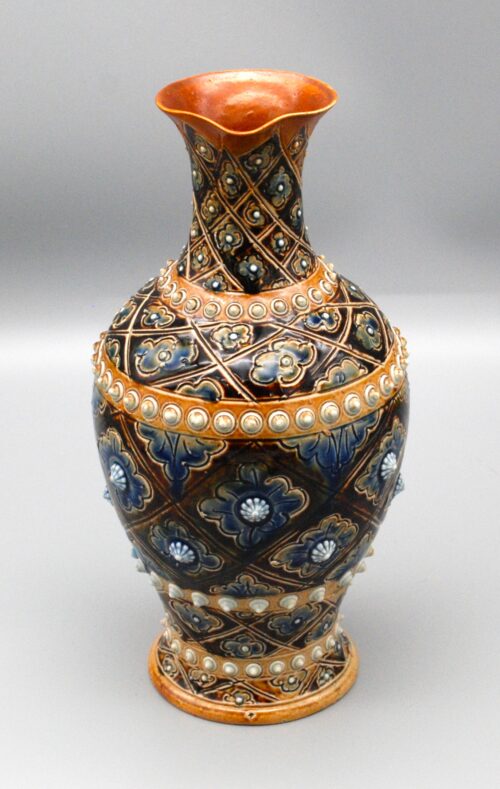
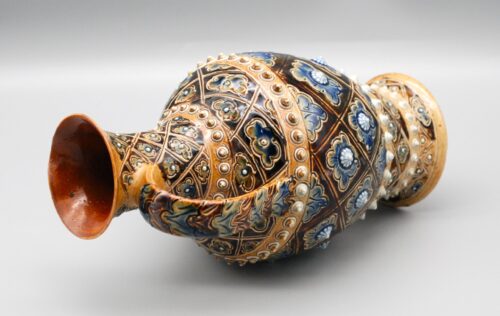 For sale is a very early Doulton Lambeth jug by their most famous artist, George Tinworth. Dated 1874, in our opinion this piece represents a rarer and finer quality work by Tinworth. Unusually, the Seaweed Scroll work is absent on this piece, as George has decided to work towards a different effect. He has used the beading which is large and raised (sharp to the touch) to create four horizon borders. He has then crossed diagonal lines to create a diamond criss-cross effect. Within each diamond segment is then decorated blue bulbous forms which house intricate florette roundels to the centre diamonds, and beads to the smaller areas. The background is coloured to mid-brown. Beneath, the jug is stamped with the early oval Doulton Lambeth mark and dated 1874. Further it has George's monogram clearly engraved and that of an assistant or thrower. The jug is in fabulous condition, with only a very minor professional, invisible restoration to a small top rim chip. The quality of this jug will delight any serious early Doulton or Arts & Crafts collectors!
 -
Out of stock
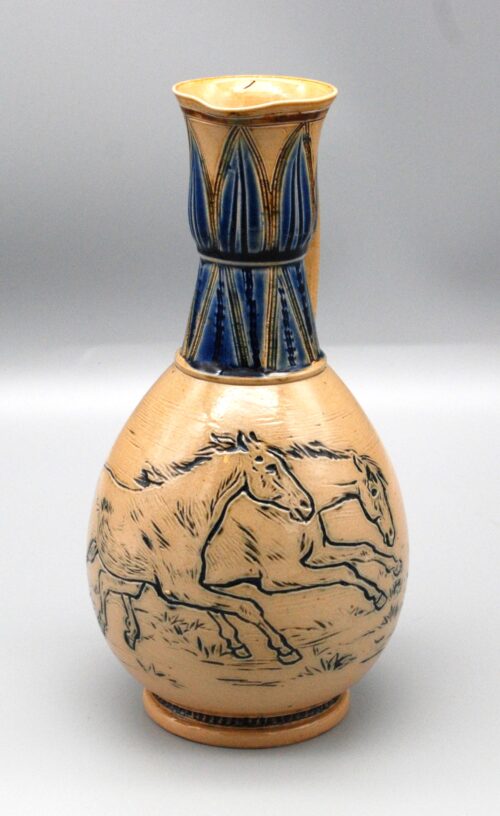 For sale is a delightful and very early Hannah Barlow Horses jug, dated 1874. Presented with two horses galloping to the front of the jug, wild grasses adorn the rear of the jug. Blue foliate designs dominate the neck up to the top rim and are typical of these early, simpler designs that are more understated than flamboyant. The handle is similarly decorated in repeated blue foliates from bottom to top. In excellent condition, the piece is highly original, with only a small flake invisibly corrected to the rim. Everything else is correct and original as the day it left the factory. Stamped with the early oval Doulton Lambeth mark and dated 1874. Hannah Barlow's initials are clear beneath as well as a production code. This is a superb piece of Doulton Lambeth history which displays superbly and has a wonderful glaze to it. Should you be interested, you will not be disappointed adding it to your collection!
 -
Out of stock
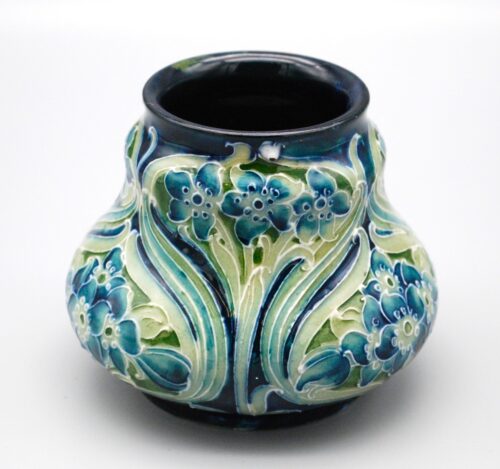
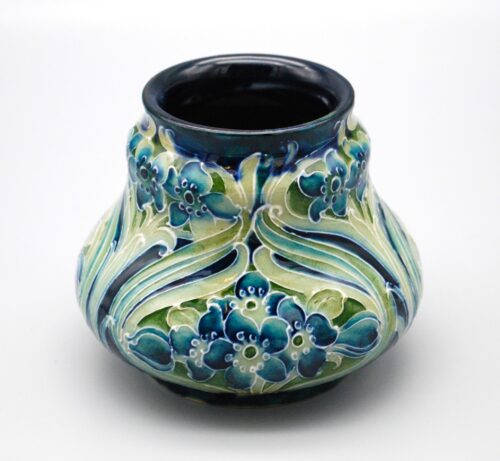 For sale is this exquisite, early Florian Ware vase by William Moorcroft, dating to around 1902. Decorated with what we believe to be forget-me-nots surrounded by whisps of foliage, it is a little firecracker at only 7cm tall! With warm blues and greens, under light in our cabinets it really does look magnificent. The whole vase from top to toe is brimming with decoration which also makes it so appealing. William Moorcroft at the time of making this piece was working for James MacIntyre & Co, where he became very successful with Florian Ware and after they closed his department, he continued in his own name to go onto become one of the most successful art potters of his time. Offered for sale in excellent original condition, this vase has had no damage or restoration. It has the "William Moorcroft Des" signature in green, present and correct for the period. "Des" indicated he was the designer working for MacIntyre and is most often seen following his name on these early pieces.
 -
Out of stock
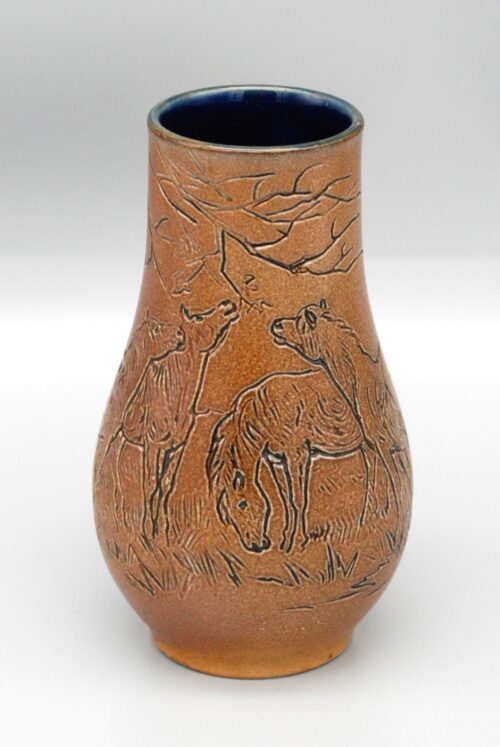
 For sale we have a gorgeous Doulton Lambeth miniature Hannah Barlow vase, dating to the turn of the century. Decorated with five horses eating grass and nibbling tree leaves, this diminutive vase is a true delight. With a bronzed stoneware glaze on which Hannah has worked her sgraffito, it is a warm, charming little piece. It would not surprise if a hint of metallic oxides were used as there is a slight lustrousness to the glaze. Measuring 13cm, or just over 5 inches, there are not many Hannah Barlow pieces of this size around!
 -
Out of stock
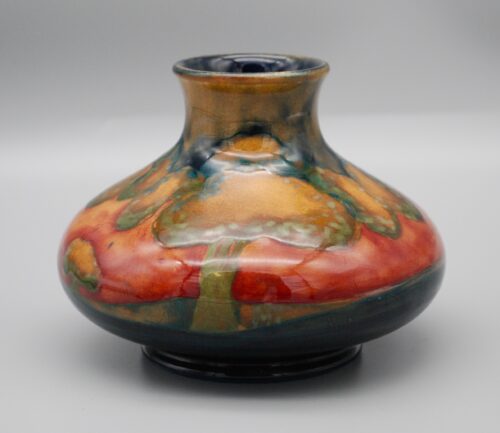 For sale is this gorgeous, Eventide squat vase by William Moorcroft, dating to 1928 or soon thereafter. Decorated with large and small trees in the wondrous evening red/amber colourway, it is a wonderful vase that displays extremely well due to the angles of the vase under cabinet lights! The Eventide pattern prominently features a landscape scene, typically showcasing a moody, twilight setting and is characterized by its depiction of trees and often includes a setting or rising sun, casting a warm, glowing effect over the scene. It is one of the most sought after rare designs.
 -
Out of stock
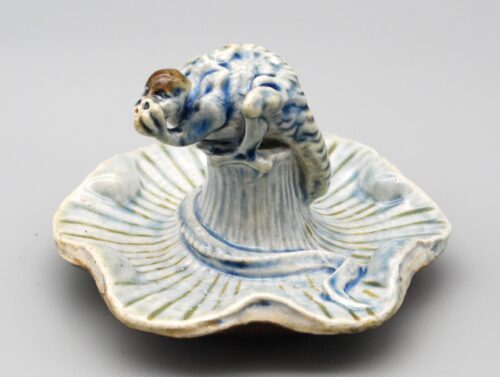
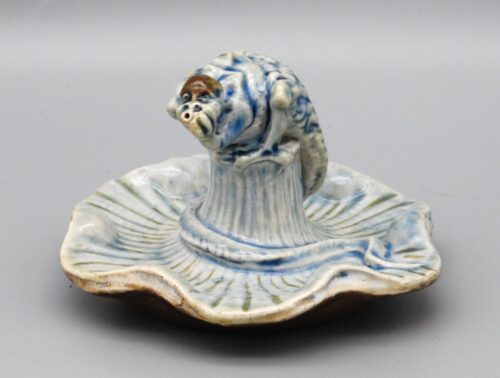 What exactly is it? For sale is this highly unusual and grotesque Martin Brothers reptile sitting on top of an upside down mushroom. Intricately constructed with a body hideous to behold, we have not seen another quite like this piece. The creature, with almost human like face, has a hand to its mouth like it is whistling, whilst its menacing double-taloned feet grip the underside of the mushroom. The body is contorted and detailed as if scaly, the texture brought out by blue against the otherwise pale cream colourway. The creature has a long tail, going down to the base of the mushroom stem and then curling around. The mushroom has long painted green strokes. Which brother made it? Likely to have been made by the brother most famed for grotesque, whimsical and macabre creations, Robert Wallace Martin.
 -
Out of stock
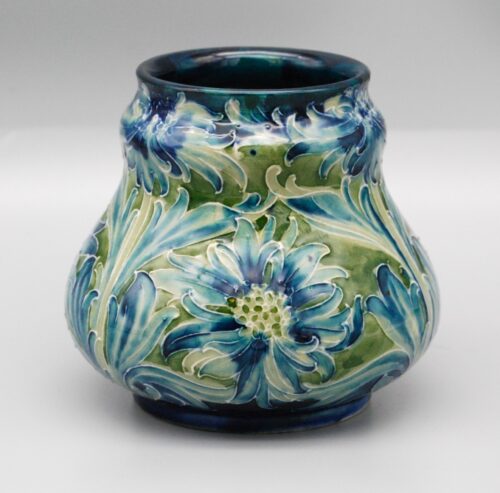
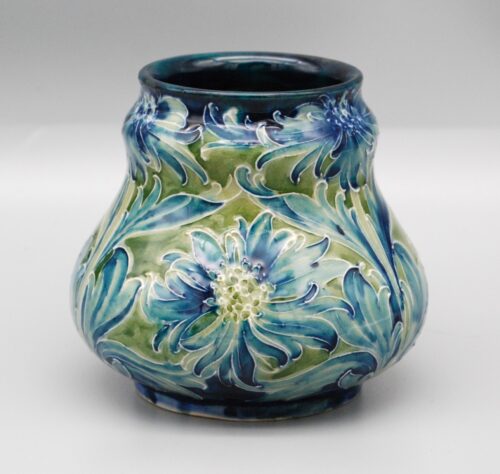 For sale we have a superb quality double-gourd Florian Daisy vase by William Moorcroft dating to around 1902. An early piece of Florian Ware in the daisy pattern, with its vibrant green and blue hues, is not just a decorative item but a testament to Moorcroft's artistic vision and technical skill. This piece captures the essence of the Art Nouveau movement and the early 20th-century fascination with nature, making it a prized artifact from the golden age of British art pottery. In excellent original condition with no chips, cracks or prior restoration. The piece is signed "W Moorcroft Des" in green ink entirely correct for the period.
 -
Out of stock
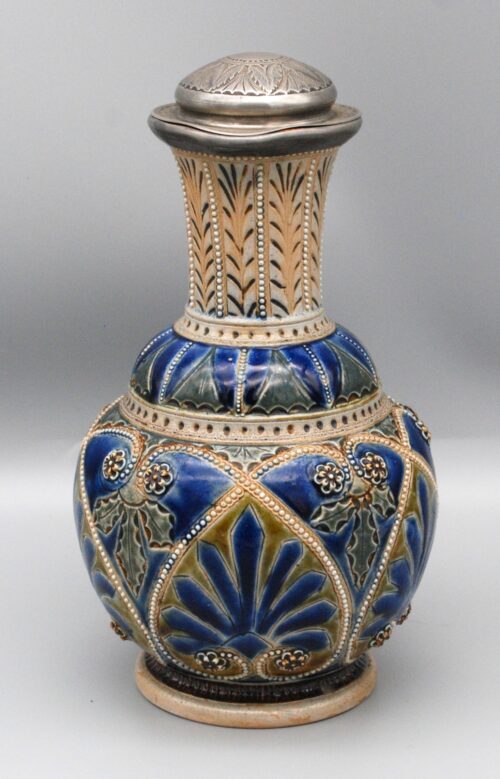
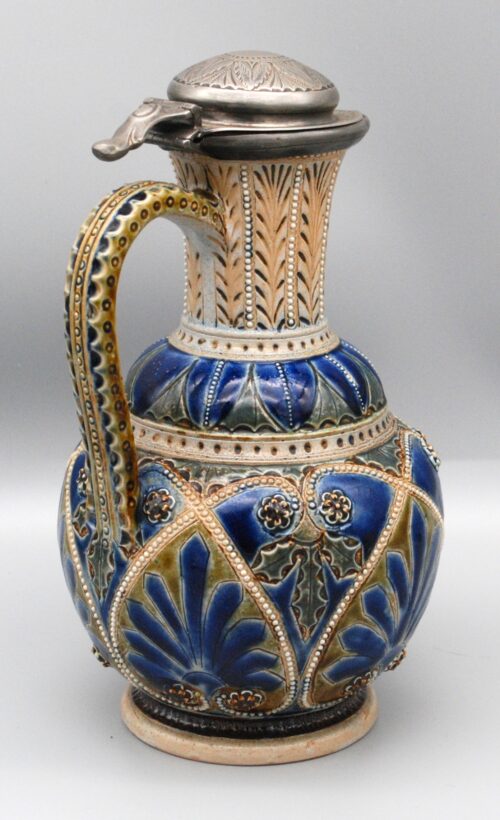 For sale we have an early beautiful Doulton Lambeth ewer by rare artist Emily J Edwards, dating to 1875. The design work shows early Tinworth influences, however Emily was a very talented artist and brings her own creativity to the piece. Holly leaves hanging from beaded banding, and then a mix of florals and angular motifs to make this an impressive piece. The dotted collars at the base of the neck show influences from Arthur Barlow too, Adorned with a pewter lid, this piece is as authentic and original as they come. A lovely piece for a rare artist who is much rarer to find than other artists due to her short tenure. The jug is free from any chips, cracks or restoration. The pewter rim is original. Beneath we have Emily's signature, together with the marks of the assistant and thrower and the Doulton Lambeth oval stamp with the date 1875.
 -
Out of stock
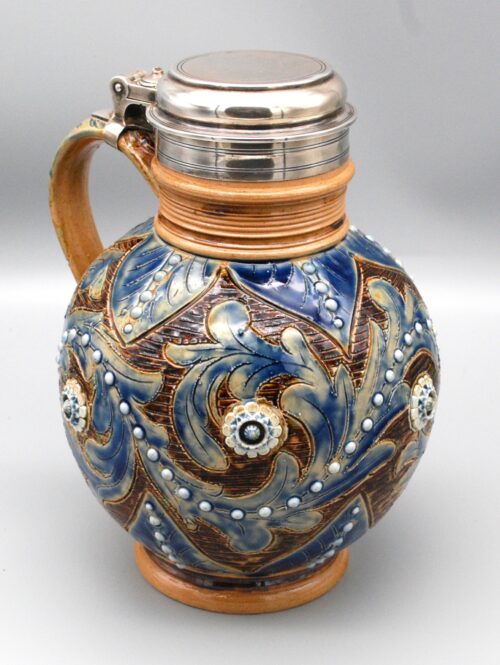
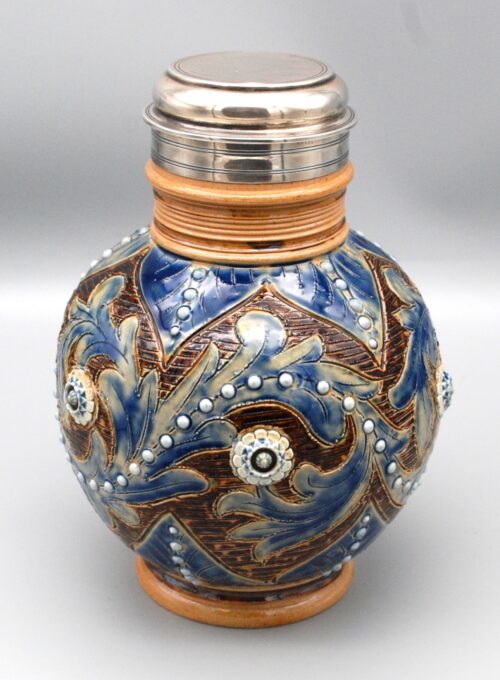 In 1873, Arthur Barlow crafted a remarkable Doulton Lambeth ewer, a testament to his exceptional skill and artistic vision. This ewer, notable for its generous proportions, is adorned with intricate scrolling beadwork, florette roundels, and elegant foliate designs. Characteristic of Barlow's style, it features his distinctive banding in the background, adding depth and texture to the piece. The top of the ewer is crowned with a solid sterling silver lid, which is original and was crafted in London in 1873 by the esteemed silversmiths Richards & Brown. The condition of this ewer is impeccable; it remains in its original state with no chips, cracks, or restoration, preserving its historical and aesthetic value. Beneath the foot of the ewer, one can find Arthur Barlow's signature alongside the Doulton Lambeth oval stamp, authenticating its origin and craftsmanship.
 -
Out of stock
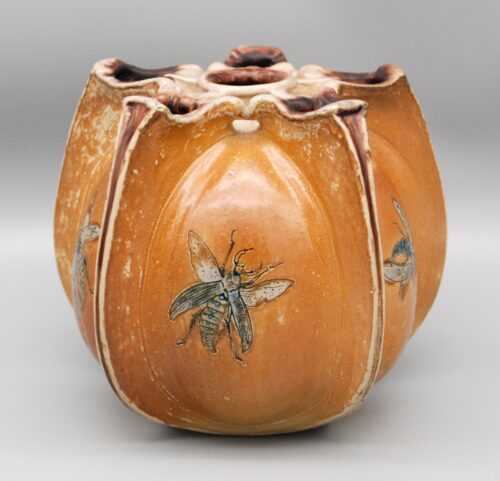 For sale is a wonderful, early Martin Brothers aquatic jug dated January 1884. Aquatic Jug - Robert Wallace Martin The Martin Brothers were renowned for their extraordinary skill in ceramics, known for their unique and imaginative designs. This jug, likely crafted by Robert Wallace Martin, embodies these characteristics. Robert, the eldest of the Martin brothers, was celebrated for his detailed and creative work. His pieces often drew inspiration from nature, as seen in the lifelike representations of marine life on this jug. Condition and authenticity depiction of the skate, mackerel, and eels adds a dynamic and captivating element to the piece. These features are typical of Robert Wallace Martin's work, known for infusing personality In summary, this piece is beautiful, highly original and its condition is immaculate, with no damage or restoration. The detailed skate, mackerel, and eels, set against a naturalistic background, showcase the remarkable skill and creativity of the Martin Brothers. Signed and dated January 1884, this jug is a valuable and collectible example of their early work, sure to be cherished by the discerning collector.
 -
Out of stock
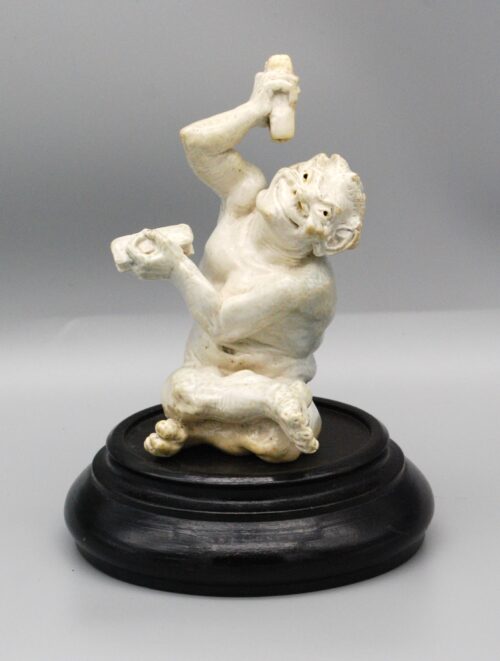 Martin Brothers Imp playing the Blocks - Robert Wallace Martin For sale is this delightful and cheeky looking imp playing the blocks. It is in excellent condition, with a very minor old "touch in" to the tip of the block instrument. Otherwise it is in wonderful original condition. It hails from the prominent collection of Barry Stock, a well known collector based out of the UK. The Martin Brothers Imps are a fascinating and highly collectible series of grotesque figures, each one depicting a whimsical imp engaged in playing various musical instruments. These figures, created by the renowned Martin Brothers, are celebrated for their unique blend of humor, artistry, and intricate craftsmanship. The Martin Brothers—Robert Wallace Martin, Edwin Martin, Walter Martin, and Charles Martin—were pioneers in the field of ceramic art during the late 19th and early 20th centuries. They are best known for their imaginative and often eccentric creations, which have garnered a dedicated following among collectors and art enthusiasts.
 -
Out of stock
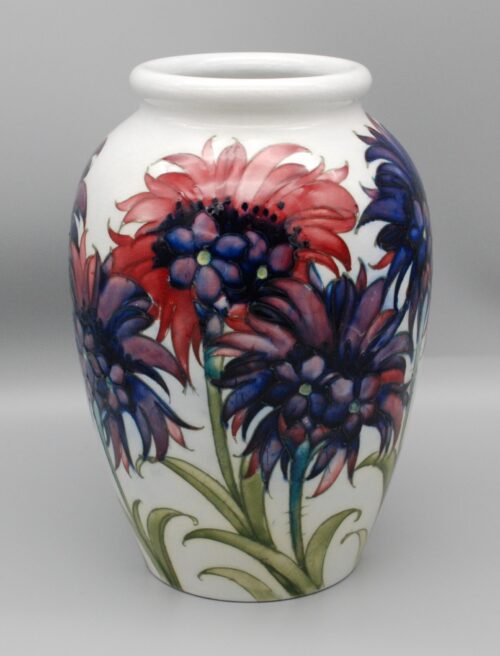 For sale is a stunning and substantial Late Cornflower vase by William Moorcroft, dating between 1925-1935. Decorated with eight large cornflowers in pinks and purples, the vase absolutely explodes with colour. Contrasting wonderfully against a white background, it displays extremely well and is an eye catching centre piece. At 9 inches or 23cm tall and with a circumference of almost 20 inches or 50cm, this is a fabulous size and worthy of any discerning collection.
Shop
Your account
Subscribe to our newsletter.

© Copyright 2026 GT Art Pottery