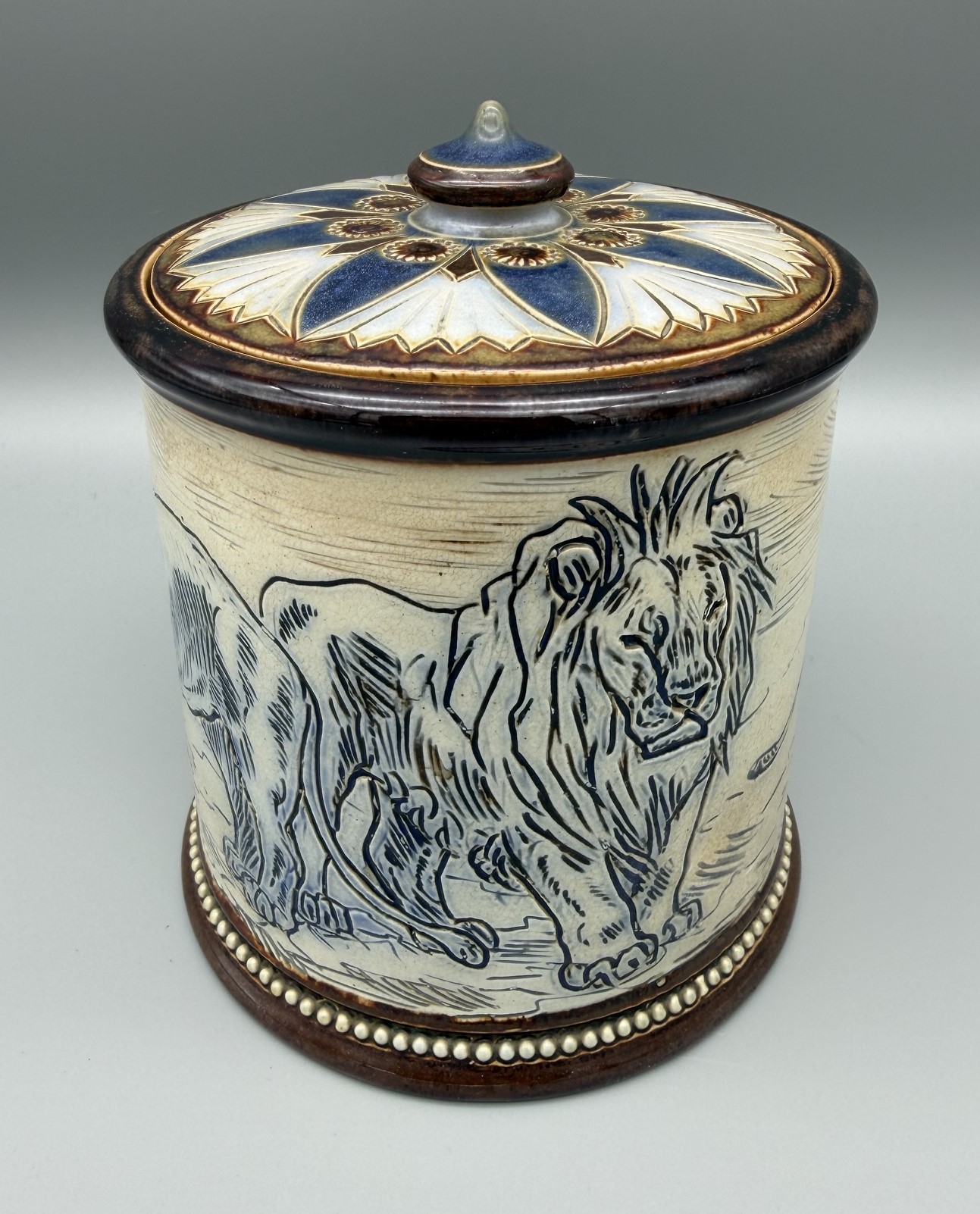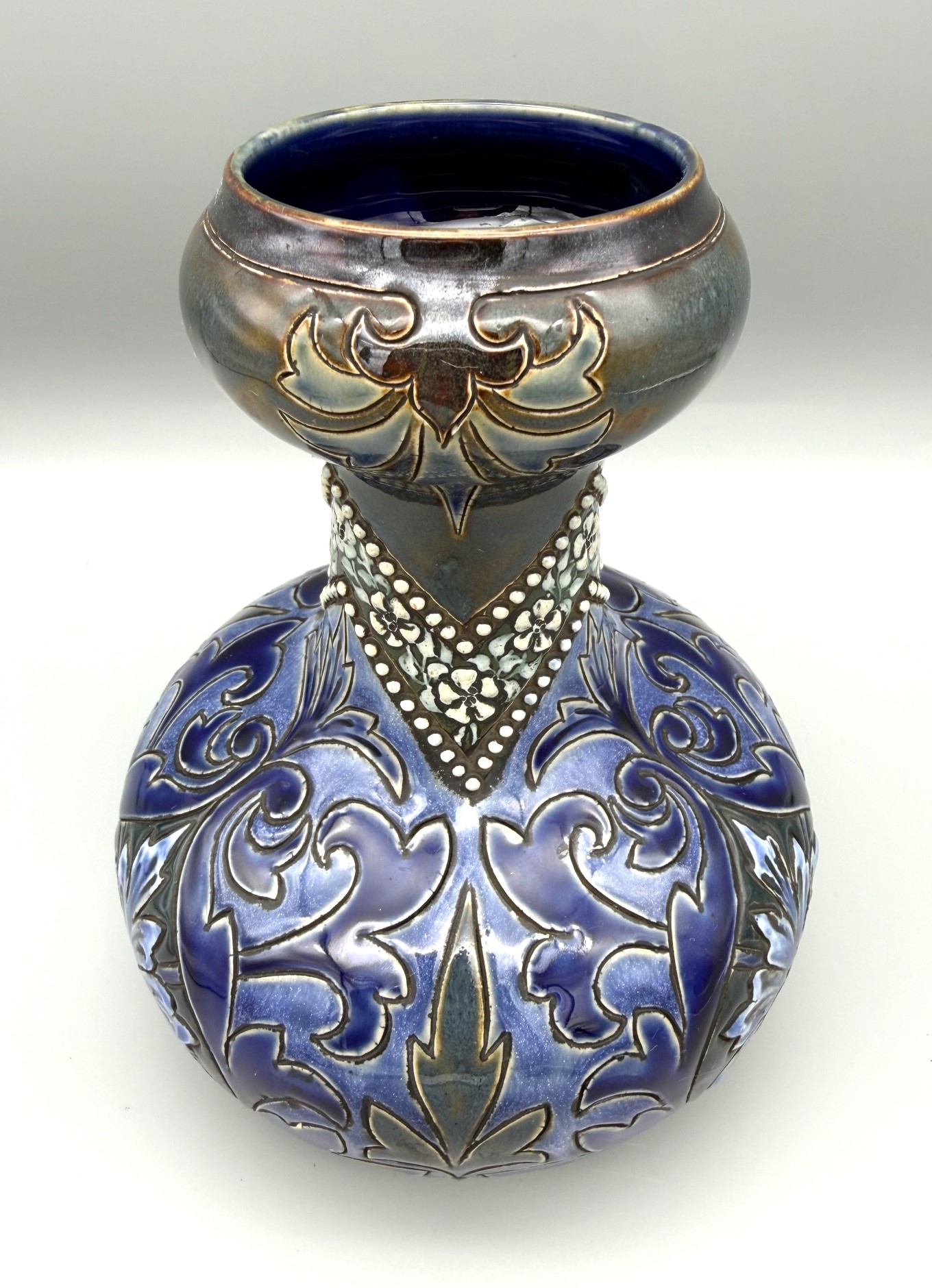
Doulton Lambeth Hannah Barlow Lions Biscuit Barrel
£1,795.00
Doulton Lambeth Hannah Barlow Lions Biscuit Barrel (c. 1890s)
A magnificent and exceptionally rare piece of late 19th-century British Art Pottery. This Doulton Lambeth biscuit barrel features an exquisite, 360-degree sgraffito study of a lion pride—depicting a majestic male lion, two lionesses, and a young male—incised directly into the clay by legendary artist Hannah Barlow. Complete with its beautiful original lid, it stands in pristine, untouched condition.
-
Dimensions: 15 cm H × 13 cm W (base)
-
Condition: Perfect, unrestored original condition
-
Marks: Stamped Doulton Lambeth “cog” mark with “ENGLAND”, incised HB monogram, and factory pattern numbers
A superlative collector’s item representing the pinnacle of Hannah Barlow’s wild animal studies.
DM for pricing and availability!
-
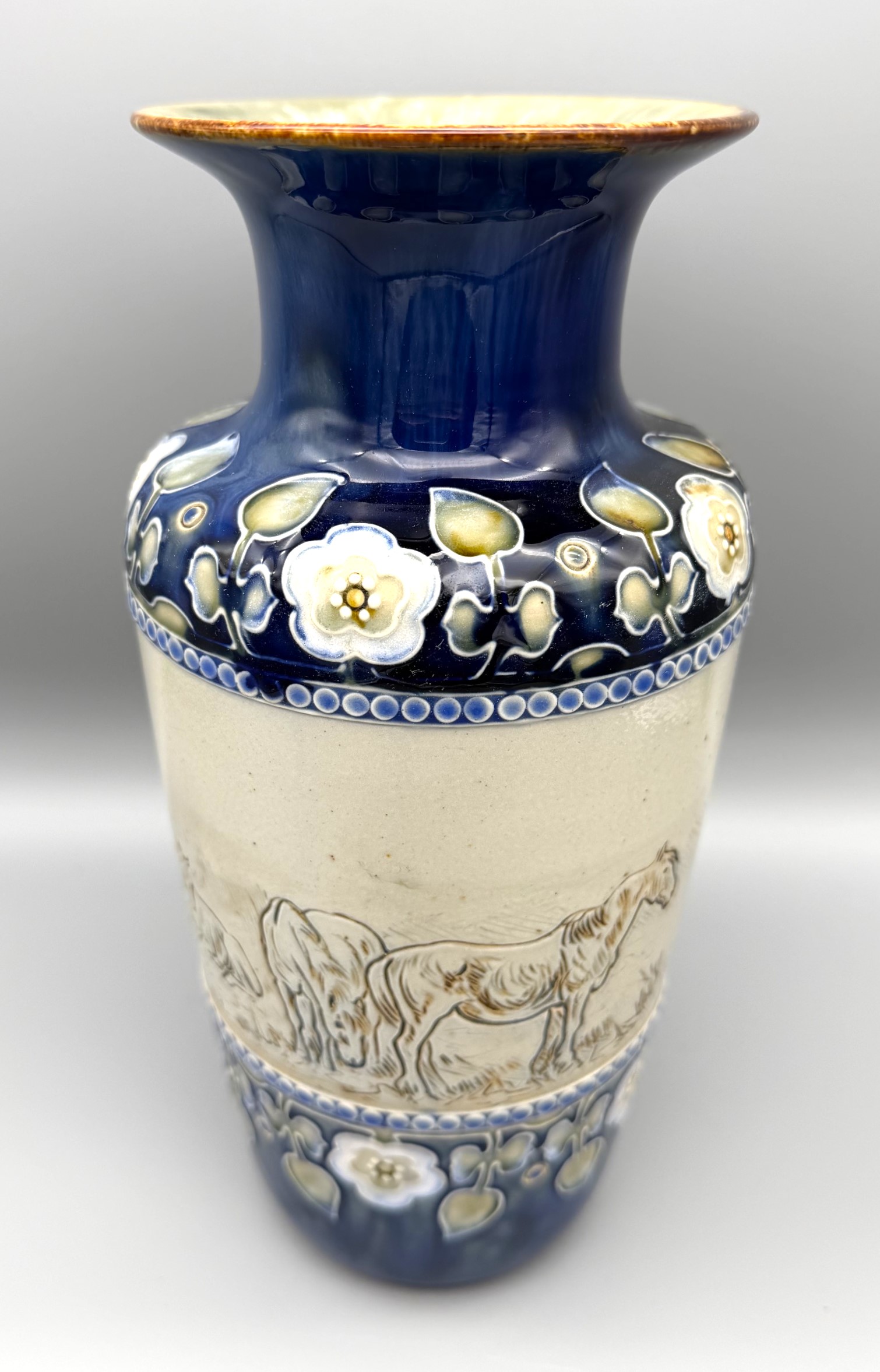
Doulton Lambeth Hannah Barlow Horses Vase
£625.00
Doulton Lambeth Sgraffito Horse Vase | Hannah Barlow & Florence C. Roberts
A superb piece of early 20th-century British Art Pottery. This Doulton Lambeth vase showcases a continuous 360-degree sgraffito scene depicting six horses, foals, and farm buildings. Hand-incised by renowned artist Hannah Barlow, the central band is framed by rich cobalt blue and tubelined floral borders created by artist Florence C. Roberts.
-
Dimensions: 27 cm H × 13 cm W
-
Condition: Perfect, unrestored original condition
-
Marks: Stamped with the Royal Doulton Lambeth mark, incised HBB and FcR artist monograms, and factory series numbers
An extraordinary collector’s piece combining exceptional provenance, rare collaborative artistry, and pristine preservation.
DM for pricing and purchase details!
-
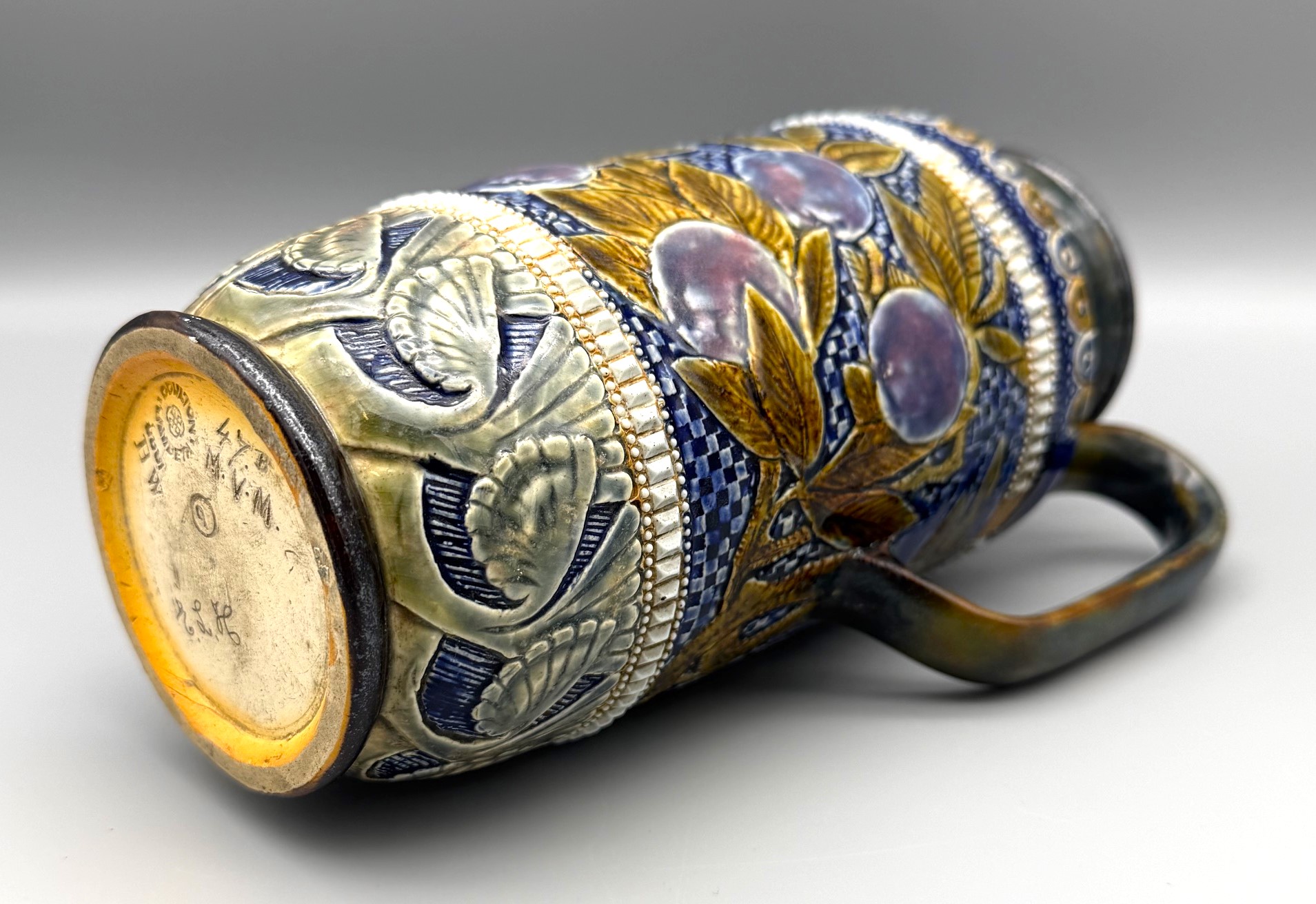
Doulton Lambeth Mark V Marshall Pitcher
£165.00
Discover a beautiful piece of Victorian art pottery with this 1880 Doulton Lambeth pitcher by the renowned Mark V. Marshall. Richly decorated with relief plums and foliage in striking cobalt blue, ochre and cream glazes, it also displays design influences from Marshall’s early work with the Martin Brothers. Fully marked to the base with the Doulton Lambeth stamp, Marshall’s initials and the original factory marks. Professionally restored to the handle and priced accordingly, this is a wonderful opportunity to acquire a highly collectible example of one of Doulton’s finest artists.
#DoultonLambeth #MarkVMarshall #VictorianPottery #AntiqueStoneware #ArtPottery #Doulton #MartinBrothers #AntiquesForSale #VictorianAntiques #CeramicCollectors
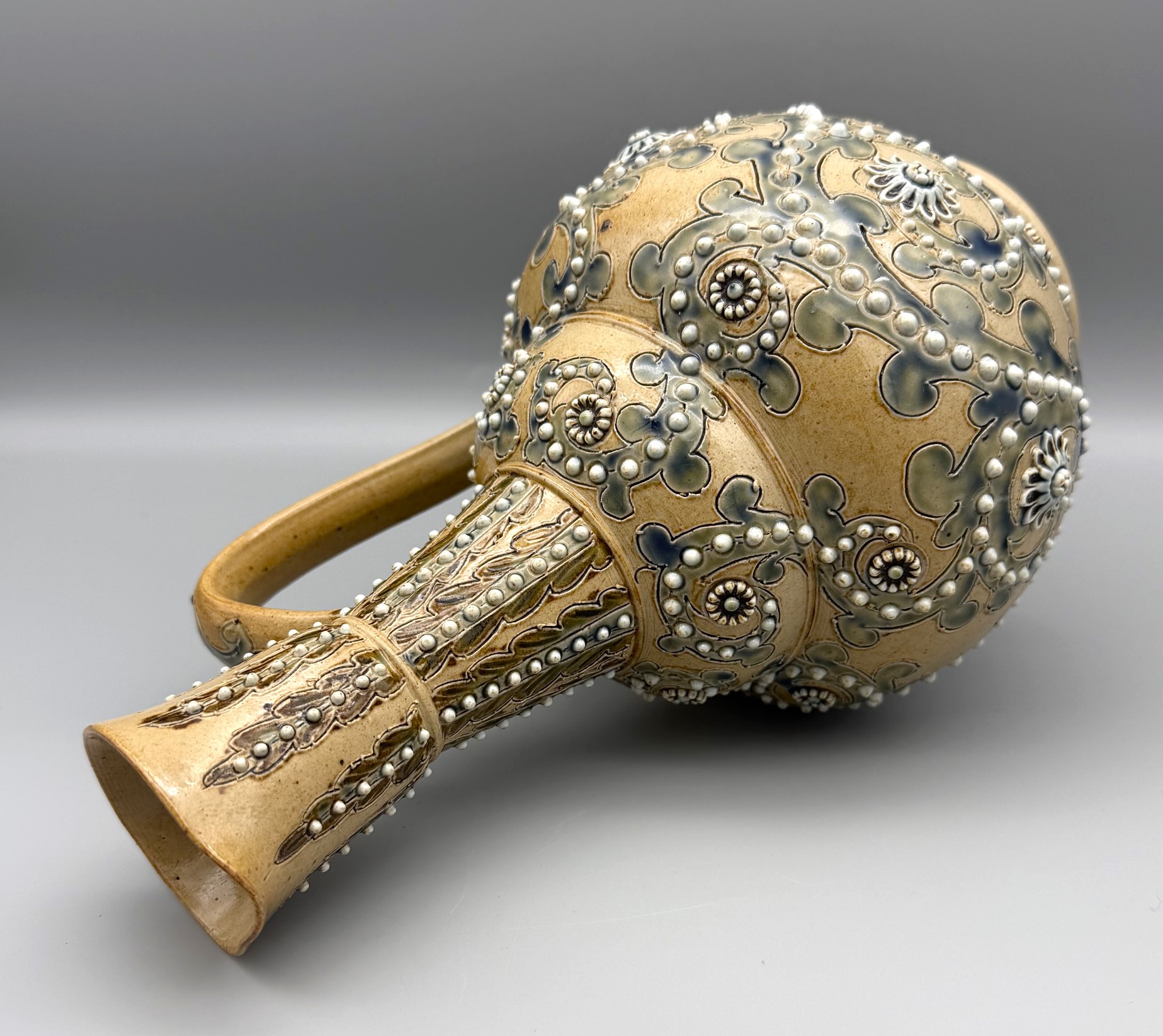
Doulton Lambeth George Tinworth Pitcher
£285.00
A rare early c.1872 Doulton Lambeth stoneware pitcher by master artist George Tinworth. Handcrafted when Tinworth was just 29, it showcases his bold early seaweed scroll and raised beadwork design. Standing 26.5 cm tall, this historic piece features early base markings and signature. A superb addition for fine art pottery collectors!
Doulton Lambeth Eliza Simmance Vase
£225.00
A rare 1887 Doulton Lambeth stoneware vase designed by celebrated artist Eliza Simmance. Featuring rich cobalt blue glazes and hand-detailed floral work, this 18 cm piece is in flawless original condition. Complete with impressed factory and artist marks on the base.
Doulton Lambeth Florence Barlow Jug
£295.00
Antique Doulton Lambeth Stoneware Jug with Victorian Silver Rim
Overview
This exceptional Doulton Lambeth stoneware jug, dated 1878, represents a stunning example of late 19th-century British art pottery. Hand-decorated by renowned artist Florence Barlow, this piece balances rich cobalt glazes with delicate, organic forms. A hallmarked Victorian silver rim crowns the vessel, adding a layer of functional luxury to a celebrated art pottery design.
Description
The jug features an ovoid body transitioning into a flared neck and an elegant strap handle. Striking vertical panels define the design, alternating between deep cobalt blue and soft cream glazes. Raised white beaded slipwork accents the central seams, introducing rhythmic texture to the smooth glaze. Near the foot and neck, stylized feather and leaf motifs flow naturally around the body, highlighting the movement inherent in Barlow’s work. A hallmarked Victorian sterling silver rim from Birmingham caps the top, providing a crisp contrast to the earthy stoneware.
About Florence Barlow & Her Style
Florence Elizabeth Barlow ranks among the most influential decorators of the Doulton Lambeth studio, where she worked from 1873 to 1909. Alongside her sister Hannah Barlow, Florence pioneered early studio ceramics for women during the Arts and Crafts movement.
While Hannah specialized in incised animal scenes, Florence gained acclaim for her delicate botanical treatments, bird studies, and structural foliate patterns. Her work relies on flowing forms, texture, and natural harmonies. This jug highlights her mastery of line, space, and applied slip decoration, showcasing her refined decorative balance.
Provenance & Marks
The underside bears clear, authentic factory marks confirming its origin:
-
Manufacturer Mark: Impressed circular “Doulton Lambeth” mark with the production year 1878.
-
Artist Monogram: Incised “FEB” monogram for Florence Elizabeth Barlow.
-
Assistant Marks: Additional impressed assistant monograms, including “HW” (Henry Winstanley).
-
Silver Rim: Fully hallmarked Victorian sterling silver from the Birmingham assay office.
Condition & Dimensions
-
Condition: Excellent original condition. The piece shows no damage, cracks, chips, or restoration. The silver rim remains securely fitted with light, age-appropriate patina.
-
Height: 22 cm
-
Width: 13 cm (approximate)
Collector’s Summary
Early dated pieces by Florence Barlow remain highly prized by collectors of Victorian art pottery and Arts and Crafts design. The combination of Barlow’s distinct hand-carved detailing, rich glaze execution, and a hallmarked silver mount makes this piece a rare and valuable addition to any serious collection.
-
Doulton Lambeth Arthur Barlow Jug
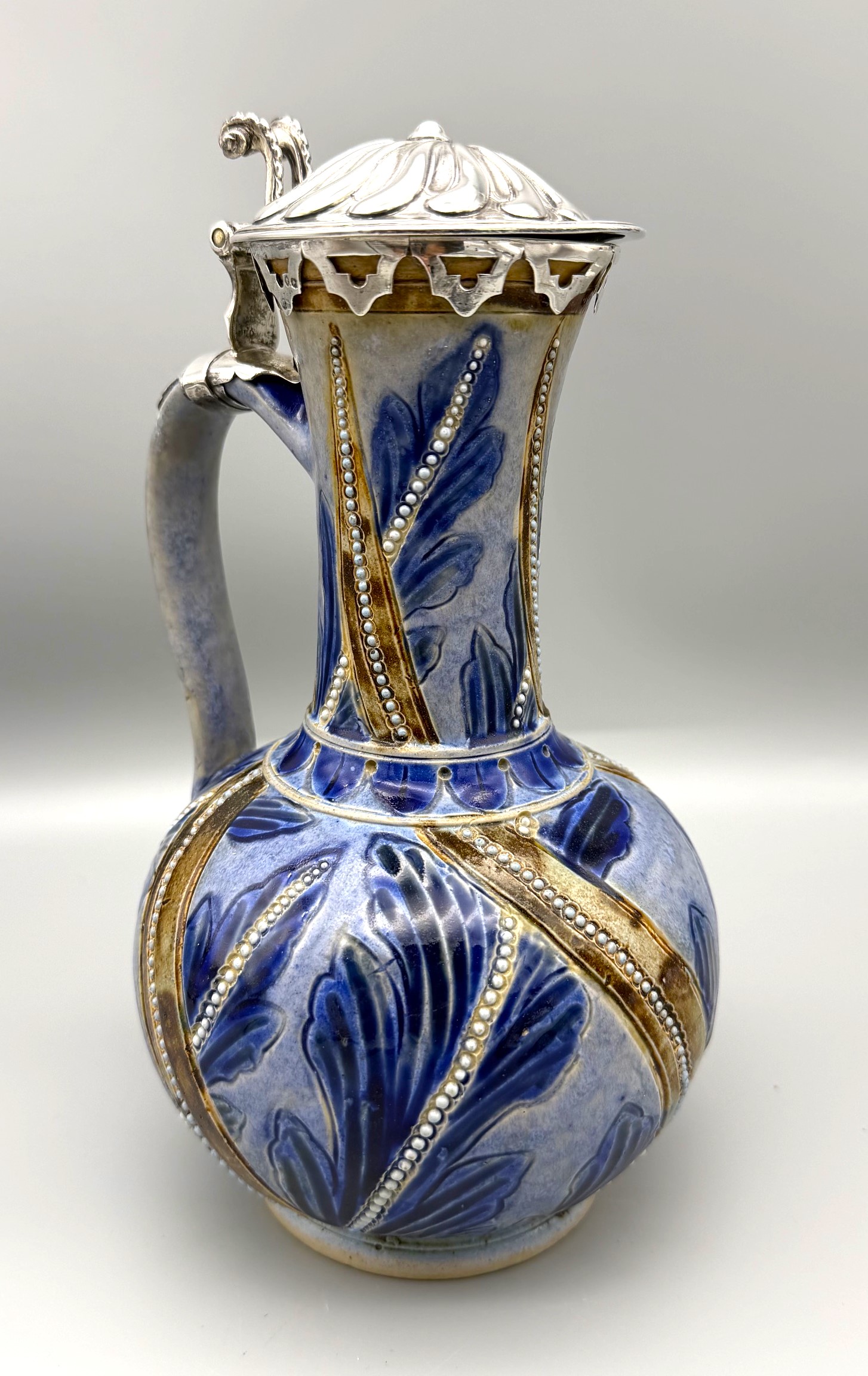
Early Doulton Lambeth Stoneware Jug by Arthur Barlow, dated 1874, with Silver Mounts and Hinged Lid
This exceptional jug, produced in 1874, is a particularly fine example of Arthur Barlow’s mature decorative style. The elegant ovoid body rises to a tall, tapering neck and is fitted with an ornate silver-mounted hinged cover, its repoussé decoration complementing the flowing organic forms of the pottery beneath. The substantial swept handle provides a graceful counterbalance to the elongated neck while lending the piece a refined architectural silhouette.
Provenance & Condition
The underside retains its full complement of factory marks, including the impressed Doulton Lambeth oval stamp with the date 1874, Arthur Barlow’s impressed “ABB” artist’s initials, together with the relevant assistant decorators’ marks, firmly authenticating its early production and studio attribution.
The jug is presented in excellent overall condition, displaying no significant issues to the stoneware body or decoration. The silver-mounted hinged cover is secure, and it is noted that adhesive has been used at some point in the past to reinforce the fitting of the silver lid to the ceramic top rim. This is a minor historic restoration that does not detract from the piece’s outstanding decorative appearance or its importance as an early, fully documented work by one of Doulton Lambeth’s most celebrated artists.
CH Brannam Sturgeon & Carp Jug 1908
£295.00
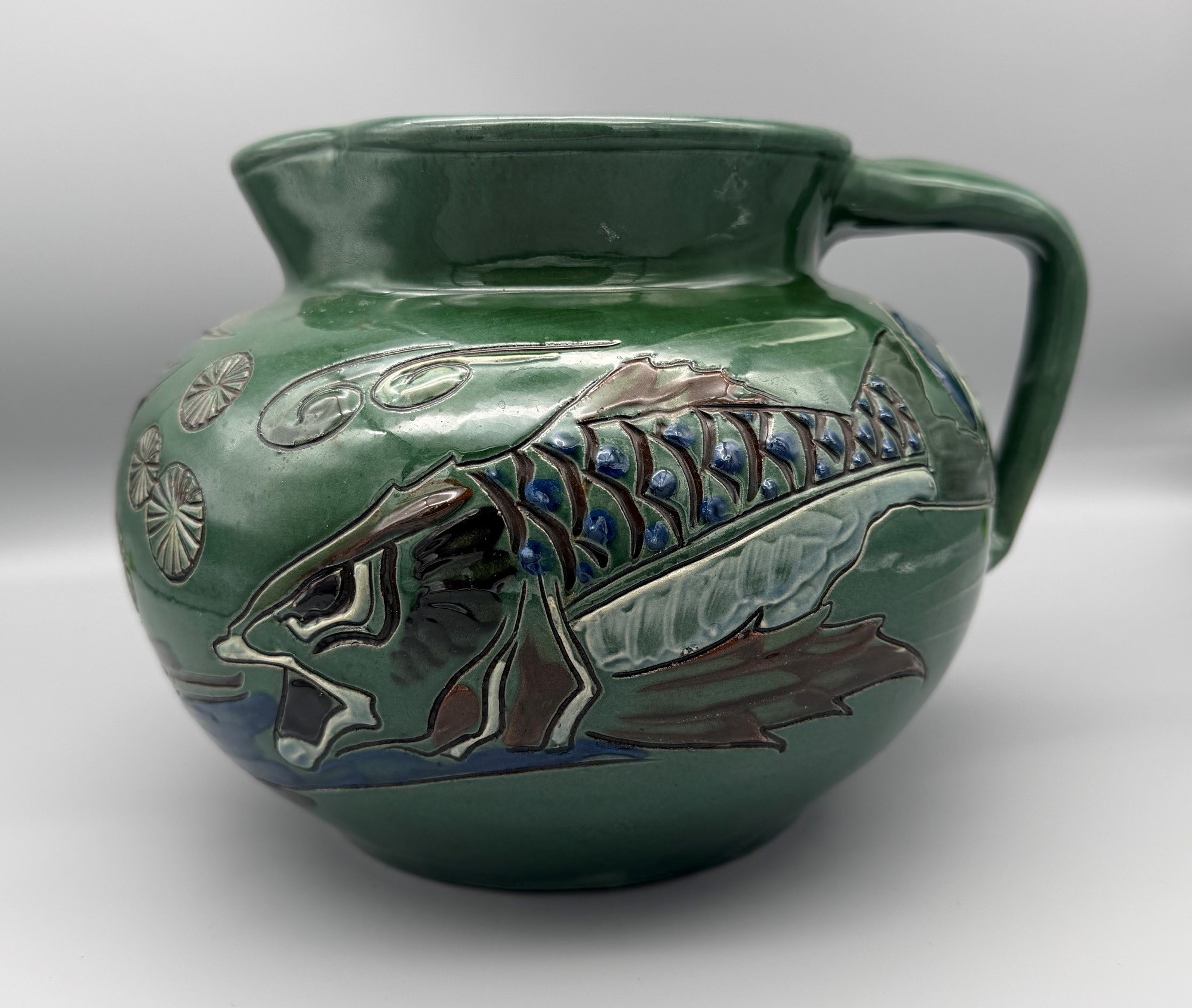
C.H. Brannam Barum Sgraffito Fish Jug by Thomas Liverton (1908)
This substantial CH Brannam art pottery jug, dated 1908, is a highly representative example of the Devon-based pottery’s Edwardian output. Measuring 17.5cm in height and 25cm across its widest point (including the handle), the vessel features a strong, squat bulbous body, a broad neck, and a sturdy applied handle.
Design and Decoration The jug is finished in a rich, deep green ground and ornamented using the sgraffito technique that became a hallmark of Brannam’s art wares. The primary decoration features a dynamic aquatic motif with two distinct fish: a beautifully detailed carp and a highly unusual, rare depiction of a sturgeon. These central figures are surrounded by stylized aquatic elements, including incised lily pads, undulating pond weed, and swirling water patterns. These accents are picked out in contrasting colored slips of deep blue, pale green, and earthy brown, showcasing a clear Art Nouveau influence.
Condition The item presents in very good, original condition considering Brannam’s fragile clay. There is a distinct, triangular loss of glaze located near the head of the carp. Additionally, the rim features a glazed-over imperfection; this is a pre-firing manufacturing anomaly rather than subsequent damage, offering a glimpse into the artisanal firing process. The remainder of the vessel displays age-related wear while retaining a highly vibrant and glossy glaze. No restoration is observed throughout.
Authenticity and Marks The base of the jug is fully marked and authenticated. It is clearly incised with the signature C.H. Brannam Barum, the date 1908, and the design registration number Rd 44561. Crucially for collectors, it bears the distinct TL monogram, identifying the decorator as Thomas Arthur Liverton, one of the pottery’s premier artists during this era.
Robert Wallace Martin Very Early Mustard Pot
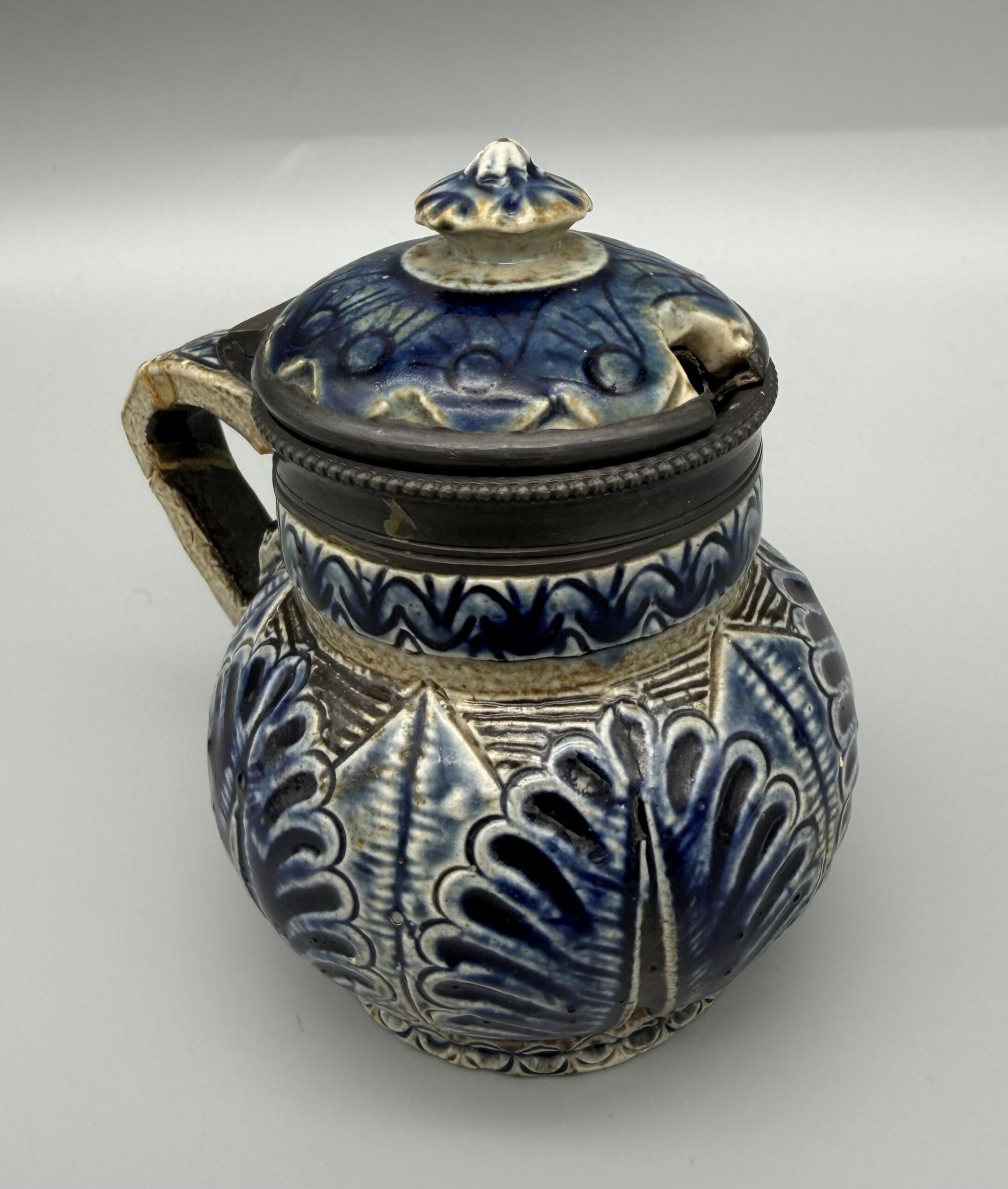
Early R.W. Martin Salt-Glazed Mustard Pot (April 1874)
This historically significant salt-glazed mustard pot, measuring 9cm in height and width, represents a rare early work by Robert Wallace Martin. Dated to April 1874, the piece features a squat, bulbous body transitioning to a structured neck and a domed lid with a sculpted finial. It retains its original pewter metal hinge mount, complete with a traditional spoon aperture.
The vessel is heavily decorated, utilizing a deep cobalt blue glaze that contrasts sharply with the textured buff stoneware ground. The exterior displays a vigorous, deeply incised pattern of stylized foliate and fern-like motifs around the lower body. This is complemented by a continuous band of repeating wavy arches at the neck and radiating petal designs upon the lid.
The underside bears the clear, incised signature “R W Martin”, alongside the pattern code “A36” and the date “4-74”, firmly placing its production in the pivotal early months of Wallace’s independent career.
Condition & Restoration Opportunity: While the main body, metal mount, and lid present strongly, the angular handle has sustained four breaks and currently exhibits old, crude adhesive repairs. This presents an excellent, straightforward project for a professional ceramic restorer or a dedicated collector. Once sympathetically restored, this piece will stand as a highly displayable and historically important 1870s artifact.
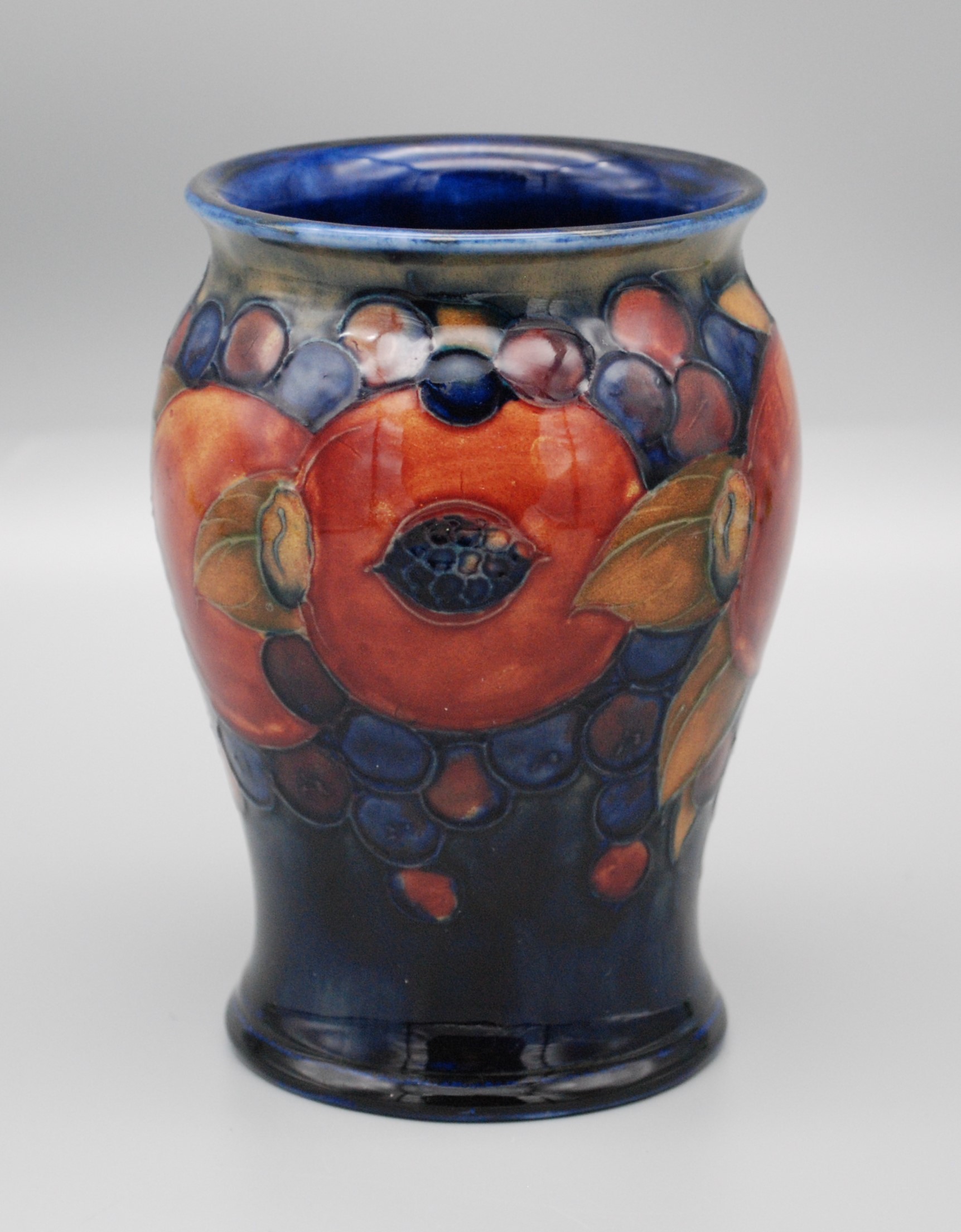
William Moorcroft Pomegranate Vase
William Moorcroft Pomegranate Vase (Circa mid-1920s)
Presenting a fine William Moorcroft vase in the highly sought-after Pomegranate pattern, dating to the mid-1920s. Measuring 13cm in height and 9.5cm in width, the vessel features a well-proportioned baluster form with a gently flared rim and a sweeping circular foot. The piece survives in excellent original condition, completely free from chips, cracks, or restoration.
The tube-lined decoration displays the iconic Pomegranate design, featuring a continuous frieze of both whole and open fruit revealing intricately detailed seeds. These are interspersed with lush clusters of rounded berries and trailing autumnal foliage. The vibrant ochre, russet, and deep crimson tones of the pomegranates contrast strikingly against the characteristic inky cobalt blue ground, which transitions subtly to a mottled greenish-ochre toward the upper rim. The high-gloss glaze remains rich and reflective, enhancing the depth of the metallic oxide colors.
The underside displays the impressed factory marks “MOORCROFT” and “MADE IN ENGLAND”, alongside William Moorcroft’s painted “WM” flash monogram in blue, confirming its authentic mid-1920s production period.
CH Brannam Green Fluted Top Vase
Original price was: £100.00.£75.00Current price is: £75.00.
25% Off
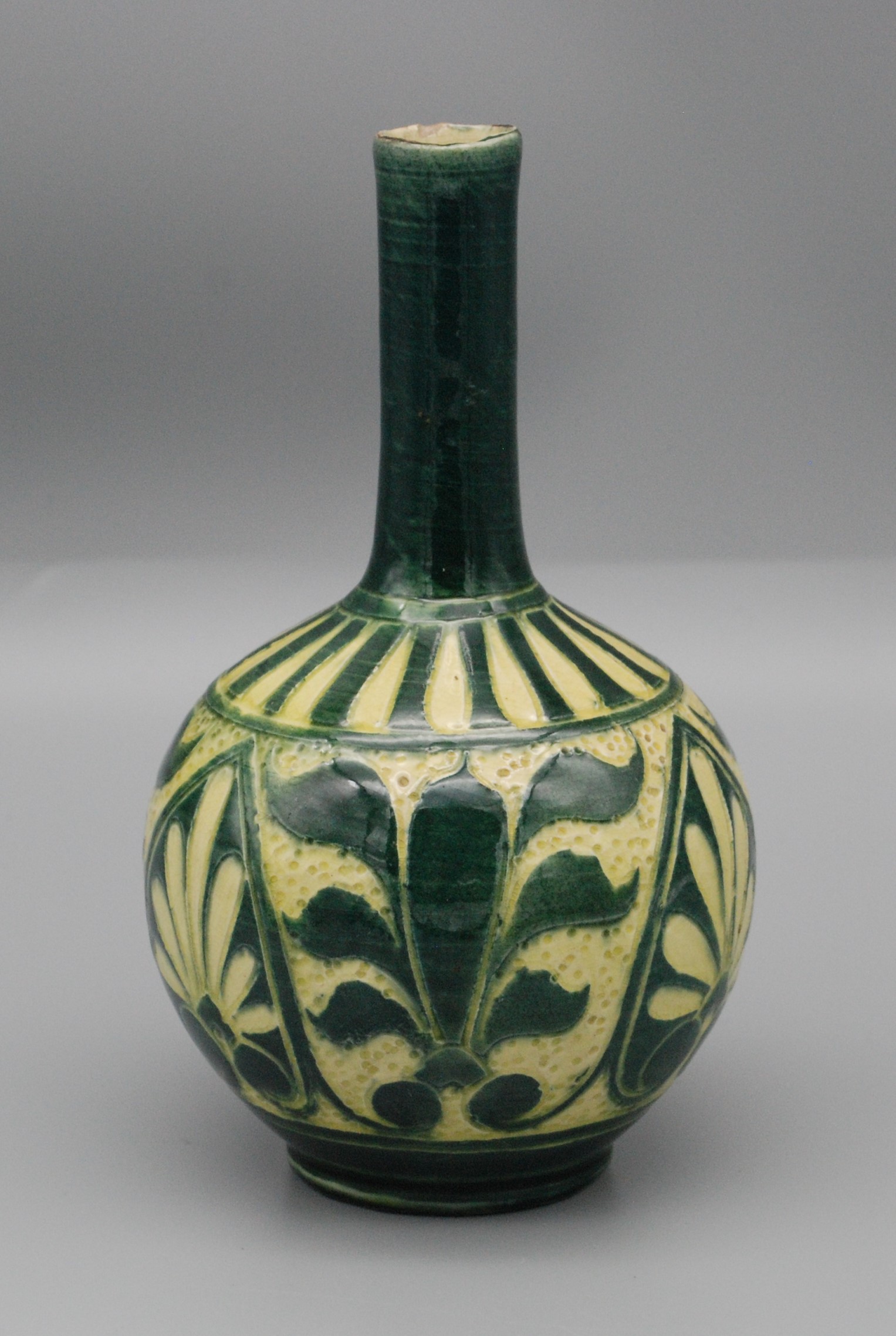
C.H. Brannam Barum Sgraffito Bottle Vase (1890)
This striking bottle vase, measuring 15.5cm in height and 8.5cm in width, is a fine representative example of the distinctive sgraffito ware produced by C.H. Brannam at the end of the 19th century. Dated 1890, the vessel is defined by a classic globular body that sharply transitions into an elongated, slender neck, resting upon a short, neat foot rim.
The tactile surface showcases a highly disciplined use of the sgraffito technique, juxtaposing a rich, glossy forest green glaze against a pale, cream-colored stippled ground. The decoration is strictly structured: the shoulder features a bold, radiating striped motif that anchors the base of the neck. The primary body is divided into panels by sweeping, arched green borders that frame stylized, symmetrical botanical and palmette designs. The intricate stippling of the negative space provides substantial depth and texture, typical of Brannam’s best art wares.
The underside bears the clearly incised signature “CH Brannam Barum 1890”, firmly dating its production. The vase presents in excellent antique condition, retaining a vibrant and lustrous glaze. There is a minor 4mm nibble to the interior of the top rim, which is historically consistent with the fragile nature of the earthenware body and does not detract from the piece’s strong display presence.
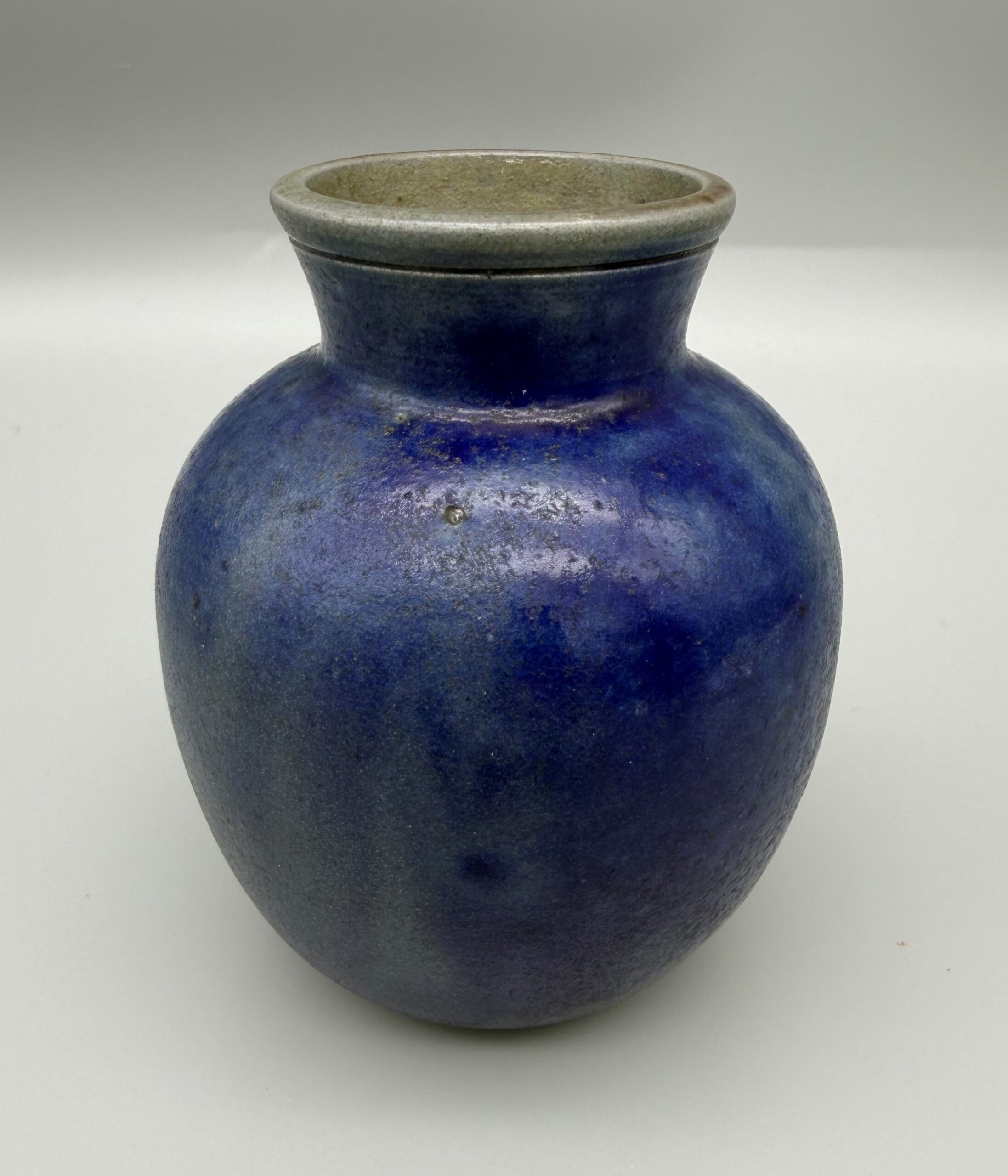
Martin Brothers Miniature Blue Vase
Martin Brothers Gnarly Olive Jug
Presenting an exceptional, historic gnarly-designed Martin Brothers art pottery jug, measuring approx. 22.5cm in height and 12.5cm in diameter. This piece from a highly sought-after potter features a robust baluster form jug, resting securely on a flared circular foot. Its gnarly silhouette is defined by a bulbous lower body that tapers into a cylindrical neck, culminating in a sweeping pouring lip and an applied, sturdy strap handle.
The jug is characterized by its tactile, heavily ribbed texture, a testament to its hand-thrown origins by eccentric brothers. A rich, dark olive-brown salt glaze dominates the meticulously textured body and handle. This deep, lustrous finish contrasts strikingly against the lighter, biscuit-toned clay left exposed at the rim, the interior, a thin defining band at the shoulder, and the foot. This earthy, two-tone palette masterfully accentuates the horizontal throwing lines that encircle the entire vessel.
Beneath the foot, the unglazed natural clay base proudly bears the authentic, hand-incised cursive signature reading “Martin” and “London”, securing its prestigious provenance. Preserved impeccably, this remarkable piece presents in excellent, original, and entirely undamaged condition, making it a museum-quality acquisition for discerning collectors of late 19th and early 20th-century British studio pottery.
Shop Grid- 4 Columnsnickgt12021-03-01T16:55:57+00:00