Martin Brothers Gnarly Olive Jug
£395.00
Martin Brothers Gnarly Olive Jug
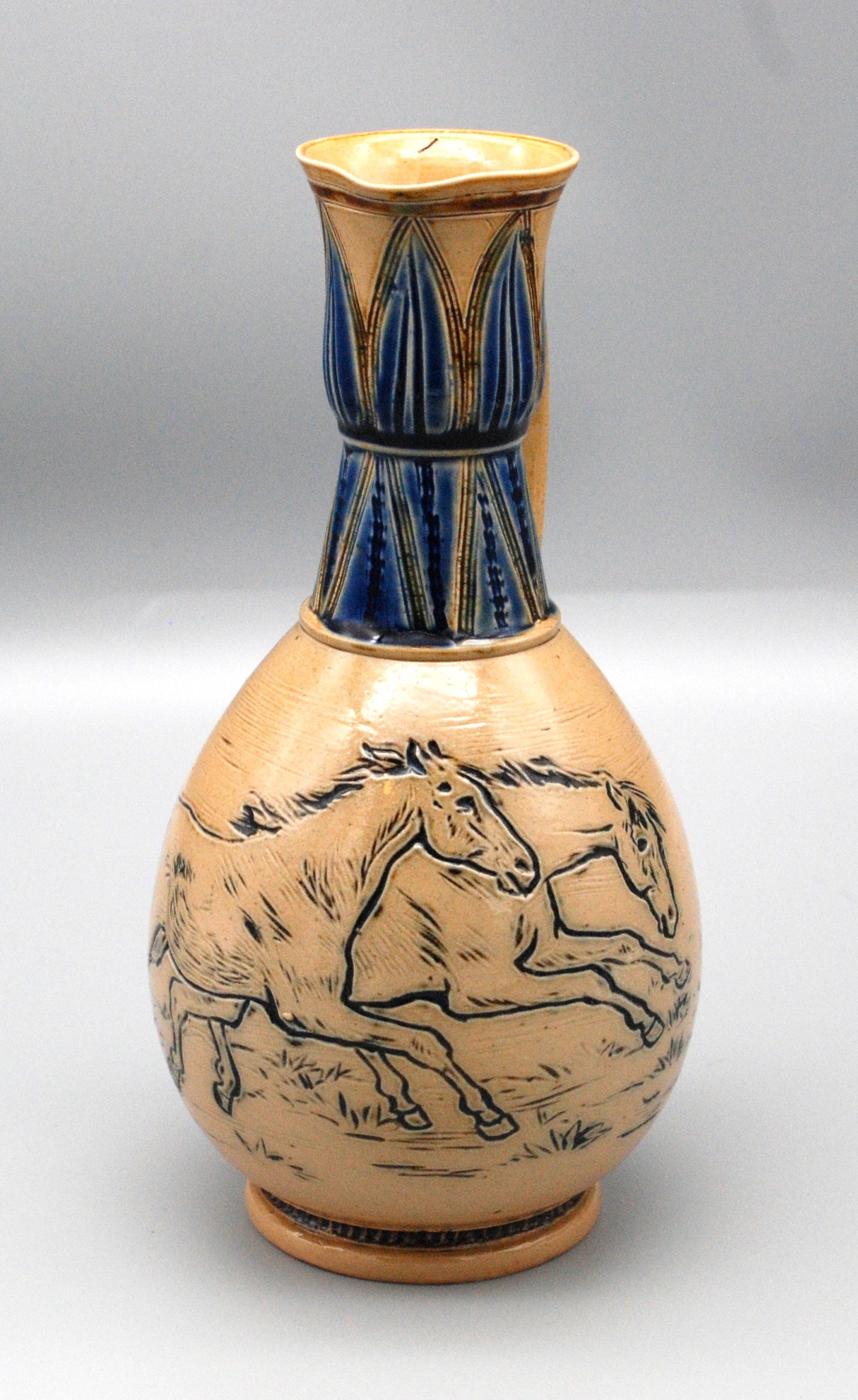
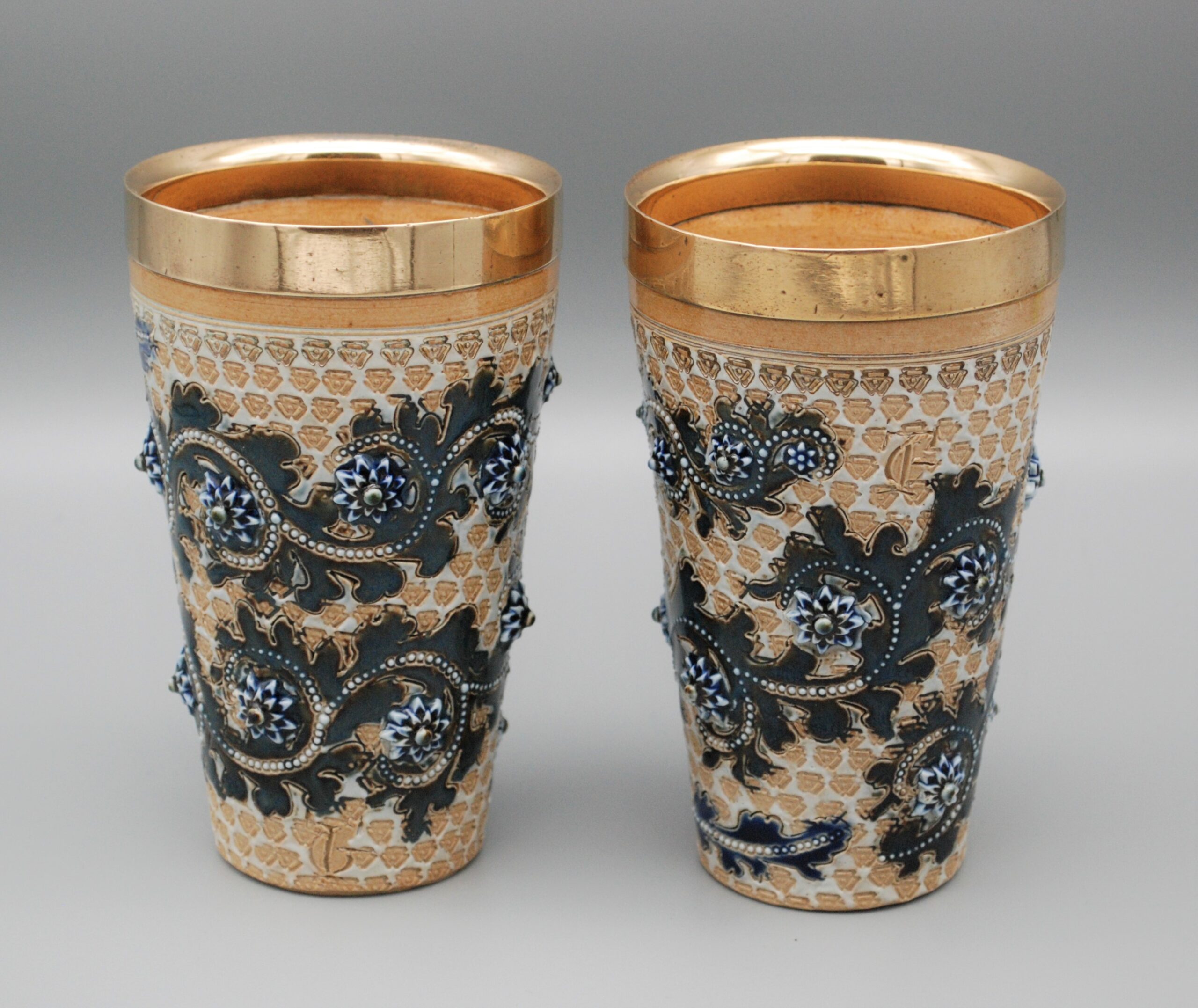
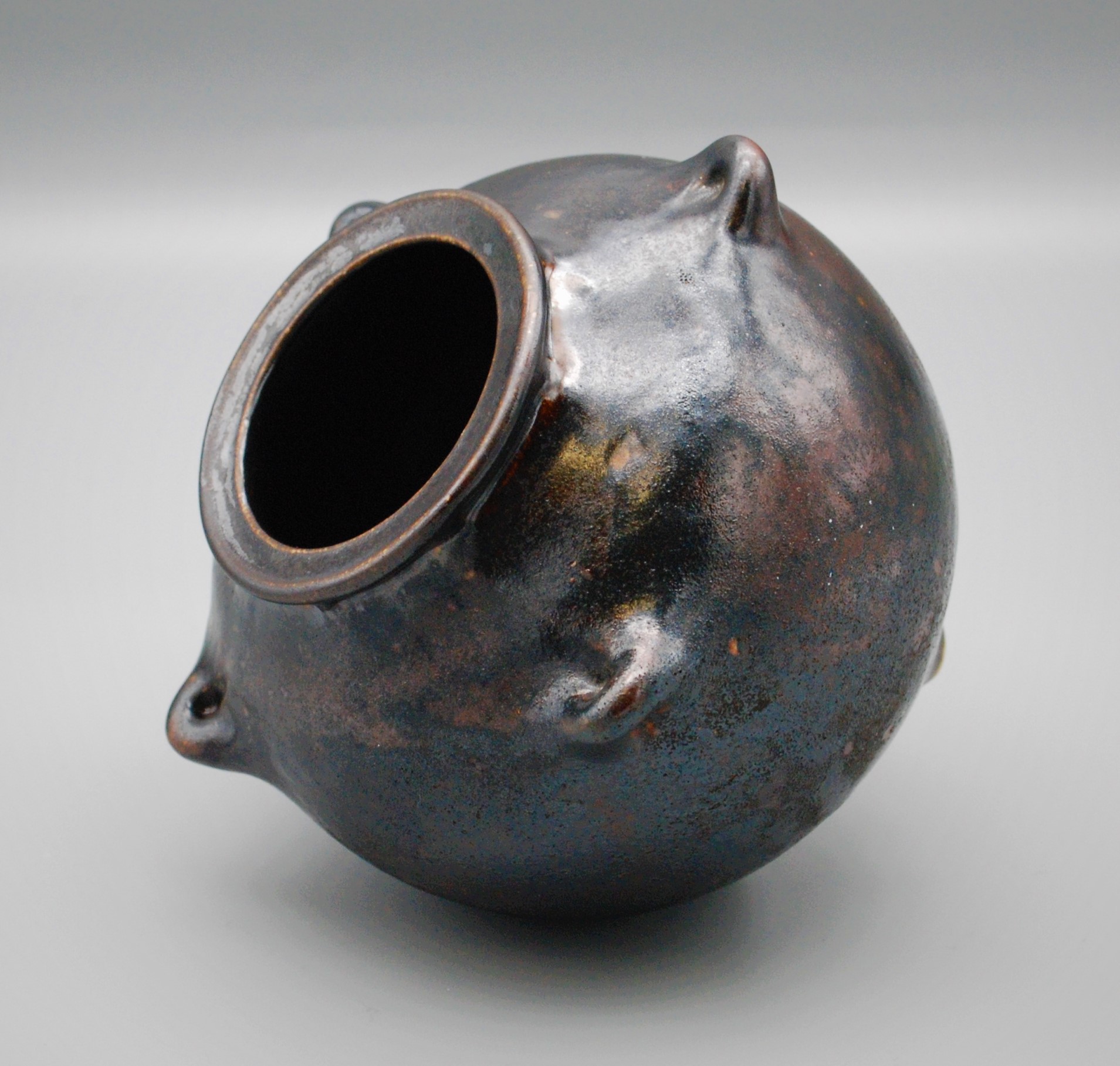
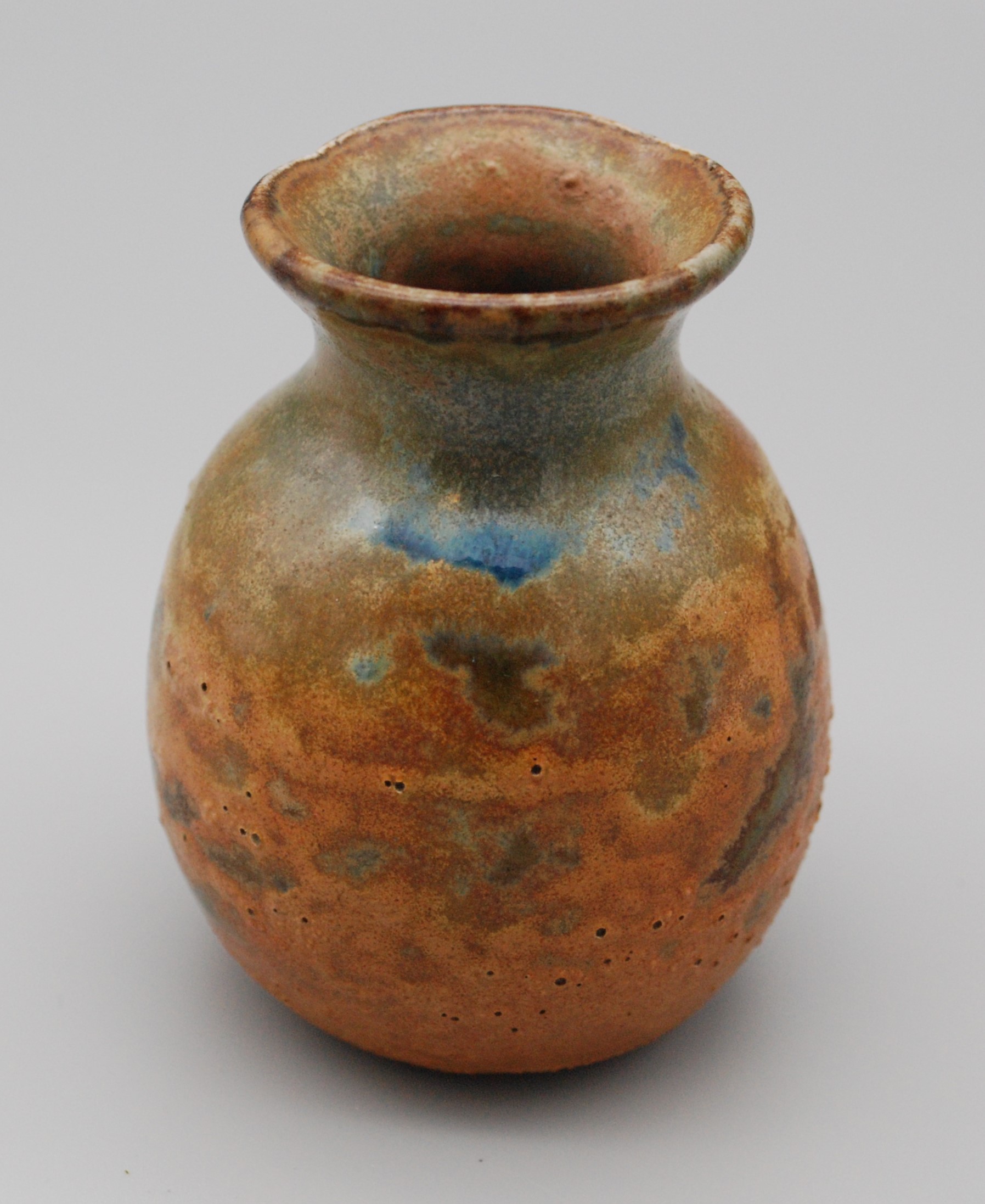
Presenting an exceptional, historic gnarly-designed Martin Brothers art pottery jug, measuring approx. 22.5cm in height and 12.5cm in diameter. This piece from a highly sought-after potter features a robust baluster form jug, resting securely on a flared circular foot. Its gnarly silhouette is defined by a bulbous lower body that tapers into a cylindrical neck, culminating in a sweeping pouring lip and an applied, sturdy strap handle.
The jug is characterized by its tactile, heavily ribbed texture, a testament to its hand-thrown origins by eccentric brothers. A rich, dark olive-brown salt glaze dominates the meticulously textured body and handle. This deep, lustrous finish contrasts strikingly against the lighter, biscuit-toned clay left exposed at the rim, the interior, a thin defining band at the shoulder, and the foot. This earthy, two-tone palette masterfully accentuates the horizontal throwing lines that encircle the entire vessel.
Beneath the foot, the unglazed natural clay base proudly bears the authentic, hand-incised cursive signature reading “Martin” and “London”, securing its prestigious provenance. Preserved impeccably, this remarkable piece presents in excellent, original, and entirely undamaged condition, making it a museum-quality acquisition for discerning collectors of late 19th and early 20th-century British studio pottery.
Martin Brothers Gentlemens’ Cigar Lamp
£1,695.00
Robert Wallace Martin Early Gentlemens’ Cigar Lamp
For sale is this incredibly rare Robert Wallace Martin Gentlemen’s cigar lamp. I have only ever seen this example from the Martin Brothers, so I am confident these are rarer than hen’s teeth.
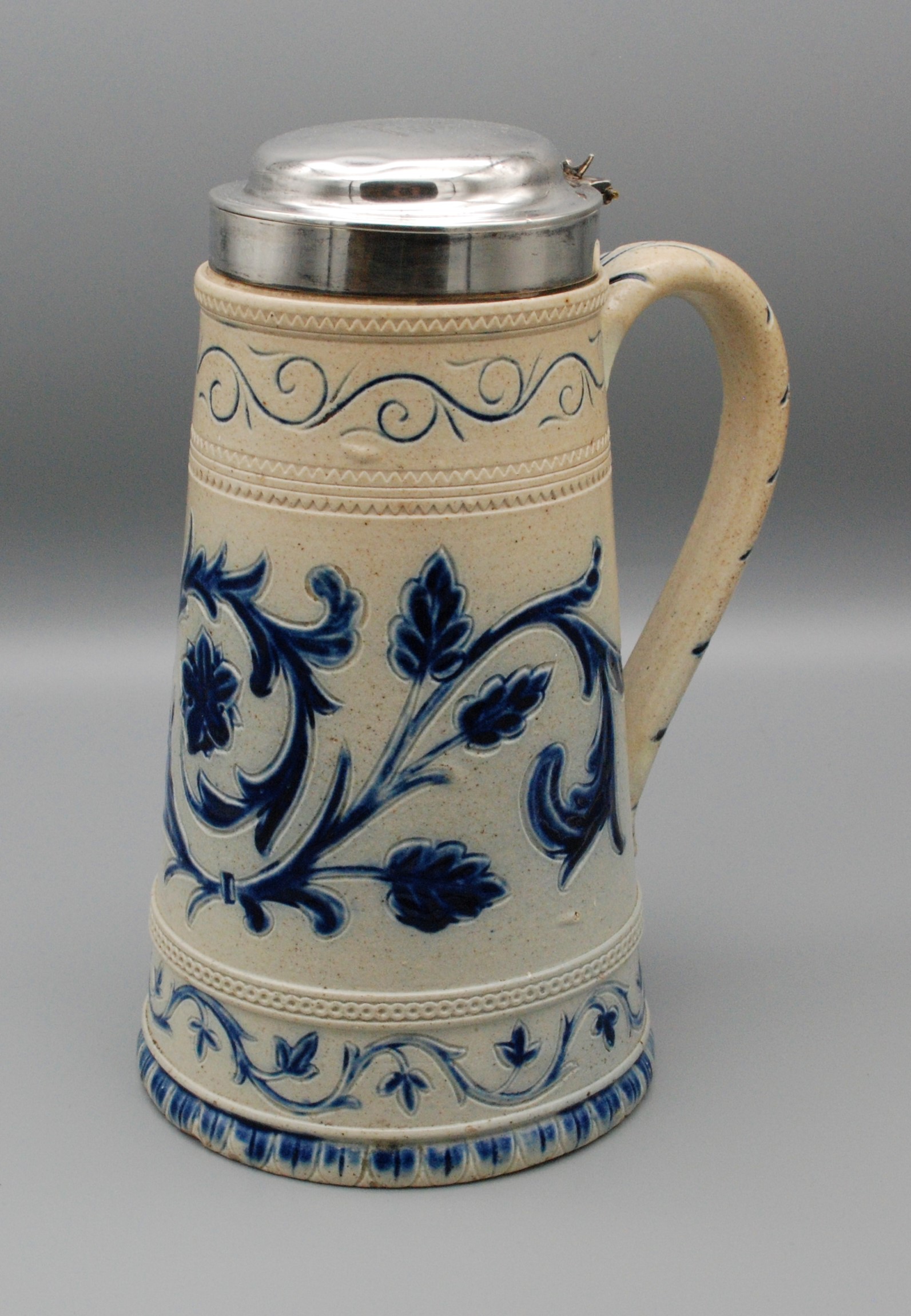
Presenting as a central oil burner with wick, it has been fitted with finely worked white metal (a silver plate metal) of excellent quality. No wear to the metal to the base layer is evident and it polishes beautifully. Any dullness is a light tarnish that removes easily. Three identical “wands” rest in the protruding wand sections, and each wand and wand seat has matching numbers 1-3 for the wands to know their position.
The way the lamp worked was each of three gentlemen took a wand, and using papers from their vespa cases, would wedge the paper into their wand and be able to light their cigars from the comfort of their leather chair, whilst the lamp remained in the centre of the table. Lighting the cigar from a “clean” paper prevented the cigar’s flavour from being contaminated by the oil flame from the lamp.
Decorated with blue floral designs with a subtle green and blue banding between, the stems rise with a lovely natural green glaze to the silver tops. Set on three bulbous feet, with three layers of small shapes banding each foot, this delightful piece is quintessential late 1870s to early 1880s Martin Brothers! Whilst approximately 14.5cm tall and 9cm across, it is very solid and weighs 710g!
Beneath the cigar lamp is the signature of Robert Wallace Martin (R.W. Martin), the figure “8” and then “Southall”.
This piece is in wonderful orginal condition that is ready to brace any serious collectors collection. Even better if you and the friends enjoy an occasional cigar, as it is a novelty that can be safely and robustly used without fear of damage as it is so well made.
Doulton Lambeth George Tinworth Carpenters Bag
Original price was: £475.00.£425.00Current price is: £425.00.
11% Off
Rare George Tinworth for Doulton Lambeth – Stoneware Model of a Carpenter’s Bag (c. 1880s–1890s)
This finely modelled stoneware study of a carpenter’s bag is a superb example of the whimsical yet highly skilled designs created under the direction of George Tinworth for Doulton Lambeth in the late Victorian period. Measuring approximately 13.5cm in length and 8.5cm in height, the model is remarkable for both its craftsmanship and detail.
The body of the bag is finished in a warm creamy light brown glaze, while the edges, straps, and handles are picked out in a contrasting darker hue, emphasising the form and adding depth. One side of the bag is richly decorated with Victorian-era woodworking planes, while the opposite side, open and more restrained, reveals only a woodsaw within. On the integrated stoneware plinth, tools of the trade—a mallet to one side and a chisel or file to the other—are carefully arranged, grounding the piece in the world of the Victorian craftsman.
This model captures Tinworth’s hallmark ability to combine utility, charm, and social observation in a single work of art. Pieces such as this, with their humour and realism, were often intended as conversation pieces and today are regarded as rare and highly sought-after examples of Doulton Lambeth artistry.
The base carries the impressed Doulton Lambeth circular mark, together with the initials “EMW”—likely one of the assistants or moulders working under Tinworth’s direction—along with the registration stamp “Rd” and the series number 162583. The piece remains in excellent, unrestored condition, free from cracks or repairs.
A wonderful and rare George Tinworth study, this model exemplifies the creativity and craftsmanship of the Doulton Lambeth workshops at their height and represents a fine acquisition for the discerning collector of Victorian stoneware and Tinworth’s celebrated oeuvre.
William Moorcroft Flambe Spanish Bowl
Extremely Rare William Moorcroft Flambé Bowl – Spanish Pattern (c. 1910–1916)
This exceptionally rare flambé bowl is a remarkable example of William Moorcroft’s artistry and experimental mastery during the early Burslem period. Measuring 23cm in diameter and 7cm in height, the bowl is decorated in the highly desirable Spanish pattern, one of Moorcroft’s most striking floral designs, introduced around 1910 and produced only for a short period.
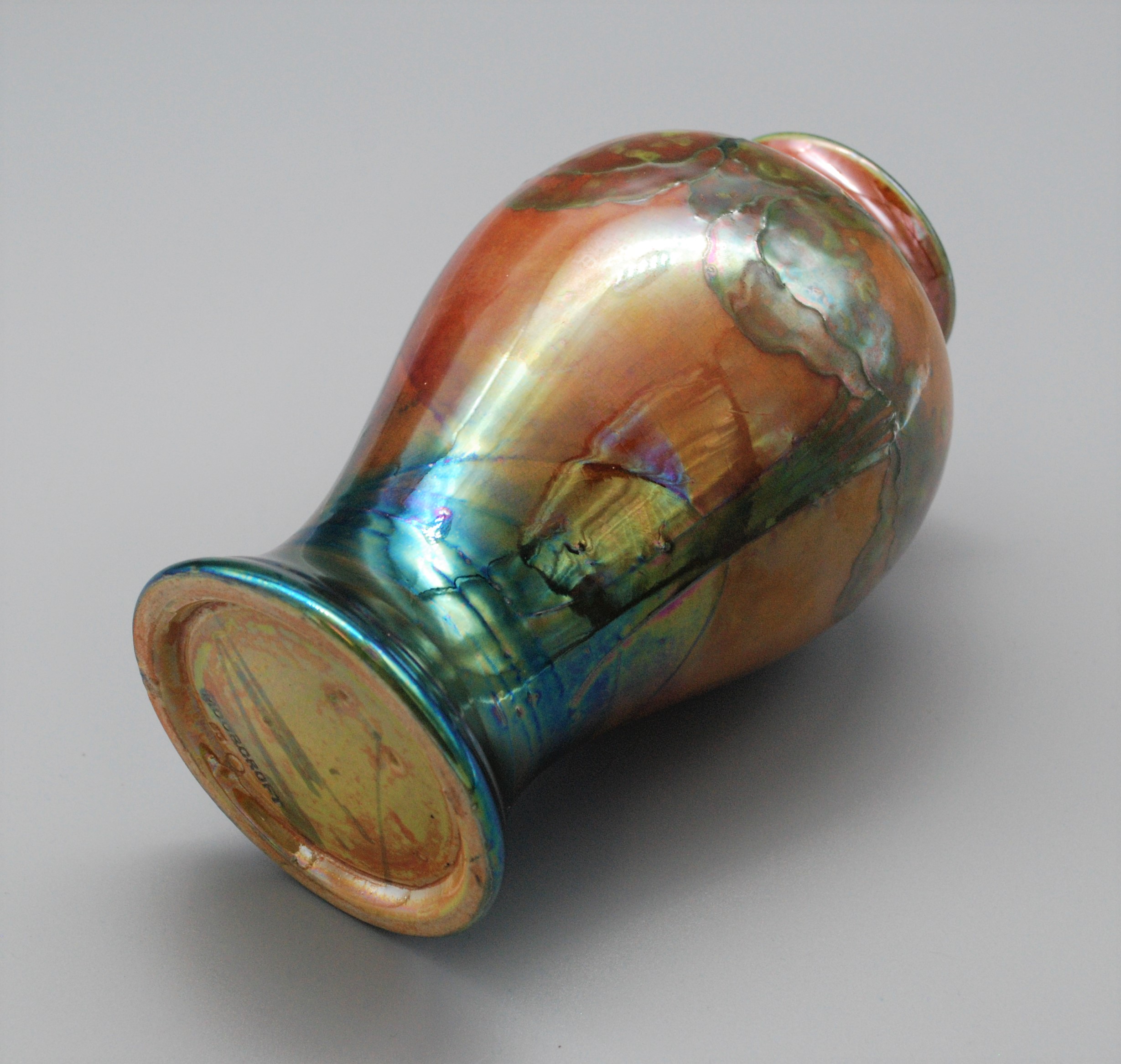
The interior reveals the hallmark tubelined decoration, with three large Spanish flowers at the centre and four medium blooms gracefully arranged around the upper edges. The exterior continues this flowing design, displaying three further large flowers evenly distributed around the circumference. The entire piece glows with a rich, iridescent pinkish-red flambé glaze, a finish Moorcroft frequently undertook personally in his kiln experiments. On this example, subtle overfiring to one side provides both visual depth and a tangible reminder of its experimental origins.
The underside is especially striking, showing intense iridescence with oily rainbow hues, reminiscent of a delicate film of light across a surface—an effect unique to flambé glazes of this period. Beneath, the bowl bears no painted signature, though its authenticity is undisputed, confirmed by its important provenance as part of the Moorcroft Museum Collection, where it was catalogued and retains its original label: “Moorcroft Museum, 00461.”
The Spanish pattern itself is historically significant, reflecting William Moorcroft’s early exploration of bold, stylised floral motifs, influenced by the Arts and Crafts movement and Art Nouveau aesthetics. Produced only in the early 1910s and in relatively small numbers, Spanish pattern pieces are today exceptionally rare, with flambé-fired examples being among the most coveted of all early Moorcroft works.
This superb and rare bowl, with its museum provenance, flambé glaze, and iconic Spanish design, represents a true collector’s piece—an opportunity to acquire an object of both aesthetic beauty and considerable historical importance within the oeuvre of William Moorcroft.
William Moorcroft Small Pomegranate Vase
William Moorcroft Pomegranate Vase – M55 Shape (c. 1910s–1920s)
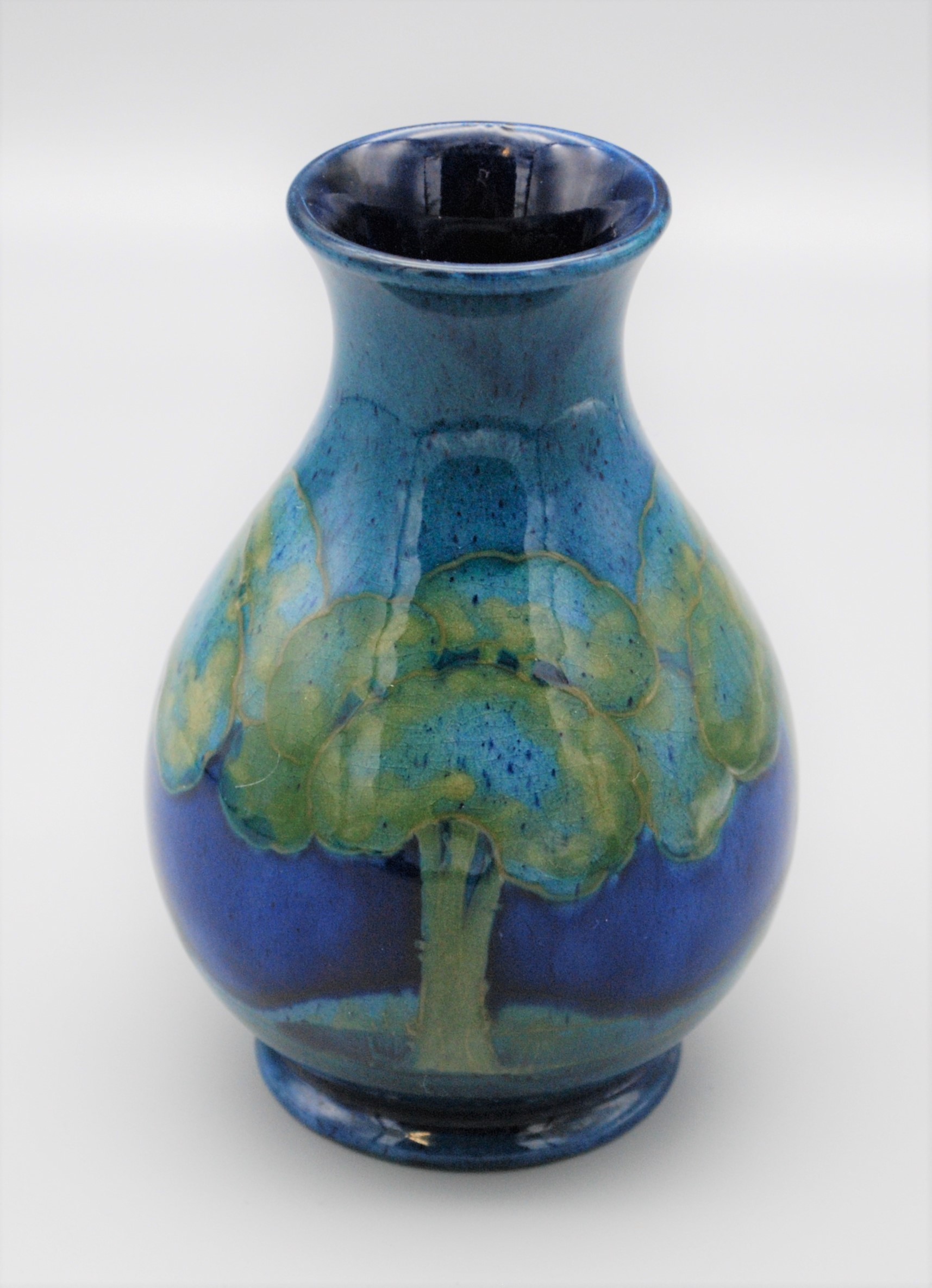
A beautiful example of early William Moorcroft craftsmanship, this small Pomegranate design vase embodies the timeless charm of Moorcroft’s celebrated Burslem period. Measuring approximately 6.5cm in height and 8cm in width, the vase is modelled in the distinctive M55 shape, perfectly proportioned for display.
The decoration features four richly painted pomegranates, evenly spaced around the rounded body, each enhanced with deep green foliage and clusters of blue-purple berries that provide a striking contrast. The design is crowned with a warm ochre glaze running up to and including the rim—an unmistakable hallmark of Moorcroft’s early Burslem output.
To the base, the vase bears a full William Moorcroft signature in green, together with impressed marks reading Moorcroft, Burslem, M55. The piece remains in excellent, unrestored condition, showing only the fine glaze crazing typical of early Moorcroft pottery, with no damage or repairs.
A lovely, well-balanced example of William Moorcroft’s iconic Pomegranate design, this vase would make a fine addition to any Moorcroft collection or serve as a statement piece in its own right.
Doulton Lambeth Agate Ware Jug
Original price was: £125.00.£85.00Current price is: £85.00.
32% Off
Rare Doulton Lambeth Agate Ware Jug with Sterling Silver Rim, Dated 1892
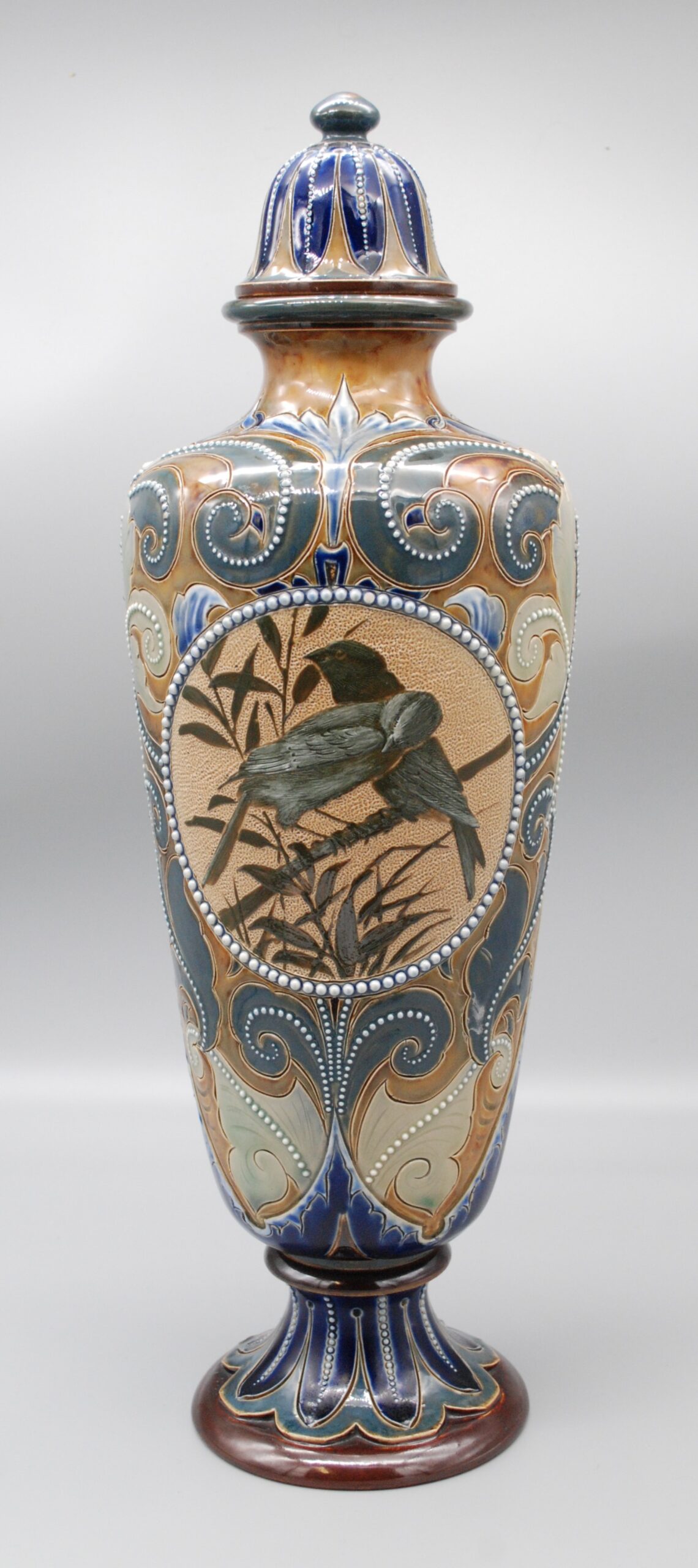
A highly unusual and artistically rich piece from Doulton’s experimental Agate Ware rangeThis exceptional Doulton Lambeth Agate Ware jug, standing 20cm tall, is a rare and beautiful example of one of the studio’s most elusive ceramic techniques. Dated 1892, it combines striking form, complex surface decoration, and a unique blend of materials that exemplify the innovation and craftsmanship of late 19th-century Doulton.
The jug is of tapered form, with a rich marbling of variegated brown clay tones characteristic of agate ware—a technique involving the mixing of coloured clays to produce flowing, stone-like patterns across the surface. These naturalistic swirls serve as a dynamic backdrop for a wealth of textural and decorative detail.
The surface features fine vertical linear striations, adding subtle texture, and is punctuated by zigzag miniature impressed motifs that create rhythmic surface interest. Two bold, raised wicker-effect bands—one encircling the base and another just below the collar—add further structure and visual weight to the form. A particularly striking feature is the flamboyant, flared handle, sculpturally sweeping from shoulder to rim with a confident, organic curve.
Crowning the jug is a solid sterling silver mount, hallmarked for London, 1892, and made by the respected silversmiths Cornelius Desormeaux Saunders & James Francis Hollings (Frank) Shepherd. The addition of silver not only elevates the piece but situates it firmly within the decorative luxury market of the time.
To the base are impressed marks including the Doulton Lambeth cogwheel stamp, “England”, the series number 7191, and the incised monogram of decorator Elizabeth Atkins, one of the documented artists of the period.
Agate Ware pieces from Doulton are exceedingly scarce, produced only in limited quantities and rarely seen on the open market today. Their technical difficulty and aesthetic complexity make them among the most desirable of all Lambeth studio wares.
A superb and tactile piece with exceptional presence—this jug would make a standout addition to any advanced collection of Victorian art pottery.
Dimensions: 20cm tall
Condition: Excellent with no restoration
Marks: Doulton Lambeth stamp, “England”, 7191, silver hallmarks (London, 1892), maker’s mark (CS over FS), Elizabeth Atkins monogram
Shop Grid- 4 Columnsnickgt12021-03-01T16:55:57+00:00